Insurance is Not Sold with John Shettle

Recently I’ve gotten to know today’s guest, John Shettle (youtube,mp3), and all along I’ve been trying to figure out how to just hook up the cables and suck as much information out of him as I could. But how do you ask someone: hey can I just pepper you with the most challenging questions I can think of in insurance for an hour or so.. you know, for fun?

I’ll tell you how.. you start a podcast and pretend “it’s all for the audience”.

John Shettle is awesome. He’s currently an operating partner at Stonepoint Capital and grew up at a family-run MGA, running brokerage and underwriting divisions before taking that company public. The breadth and depth of John’s experience is extraordinary. As another highly successful insurance executive put it to me recently, you can never have enough time with John. I’m honored to have the chance to bottle a bit of him up for us all.

Here is the story of him firing a cherished employee for selling insurance on price:

JS: when I was running an Insurance Brokerage, it had a very very what I thought of was a low retention rate and it was an area that certainly needed to improve on… and so when I reorganized the sales function one of the things that I really emphasized was we’re not going to sell on price and when the client comes in and asks for, ah, says you shopping and he wants to get a quote we don’t respond by getting him the quote we begin to go into a process of Engagement and I also said that to the Salesforce that: “we’re all kind of salary plus commission based, if I catch any one of you just selling price and getting quotes you’re going to be instantly fired.”

And to that extent one day a young gentleman named Eric who I love to death like a son I would keep my office right in the in the area of the office where we had all of our sales reps and I would put myself in the loop when I have time to take sales calls and I overheard him on the phone: “sure mr smith, let me go and get you three or four quotes and I’ll call you back in about an hour” and it broke my heart and I fired him on spot in front of the whole sales organization.

David Wright: No kidding. What should he have said?…

John then gives one of the most lucid lectures I’ve ever heard on how to sell. He’s a master. It’s phenomenal.

But that’s not all! John also explains quite clearly how insurers get it wrong, too:

all the myriad examples of when companies got it wrong… it really comes down always to the combination of 3 things.

One is the underwriter didn’t understand the risk.

Secondly, the underwriter mispriced the risk.. sometimes that happens on purpose.

And third is what I would call sloppy underwriting so when you know you should get certain information and you don’t get it. Where the broker says yeah I know but look it’s the same as last year nobody else is asking for a renewal app why are you asking for it, right, if you want all this stuff I’m just going to go take it somewhere else. What I’ve found is that underwriting disasters happen when two of those three things happen.

And of course there is so much more, including that description of how to sell, a deep dive into the difference between specialty and standard lines and John’s first sales experience (because it’s always good to hear how even the legends start out as doe-eyed newbies like the rest of us).

JS: I remember being scared to death

DW: yeah

JS: 25 years old.. to a retail customer a policy for $110 and it was like a nothing policy and I just remember

DW: were you kind of surprised that he bought it?

JS: yeah and I remember walking on air the rest of the day. And just the adrenaline rush of selling something and having it accepted by somebody you never met was actually pretty cool

Subscribe to the Not Unreasonable Podcast in iTunesstitcher, or by rss feed. Sign up for the mailing list at notunreasonable.com/signup. See older show notes at notunreasonable.com/podcast.

Our Spirit Guide

My guest today is Rick Lindsey (mp3, youtube), who has attracted some attention in the insurance market because his company, Prime Insurance Company, is willing to take on the toughest risks in the toughest lines of business, particularly commercial automobile insurance which is going through a wrenching dislocation right now. Very, very few insurers are making money there. Prime is making a fortune.

Why? How? Then I heard that Rick is from Utah, pilots is own helicopter all over the country and I instantly knew I needed to get to know this remarkable contrarian. I was not disappointed. Rick has built an amazing organization with an amazing culture.

Rick Lindsey: Every other business you’re not asking someone else to tell you what the product is worth… what we do is use common sense. First thing I ask you let’s see what you have.. show me the claims.

Every year we ask them: how did we do on your claims. Because that’s all I care about. I want my insured to tell me you guys were great. You talked to us about the claims, you kept us informed about them and we agreed with the result. With what you did.

What I hear from everybody else is..

what happened on your loss run?

I don’t know.

Well did you know they paid it?

No, I didn’t even know they paid it.. first thing I know it’s on my loss run.

Well why’d they pay it?

I don’t know. I wish they wouldn’t have. they shouldn’t have paid it.

As a company we need to have a relationship with our insured… they feel scared and uncomfortable and their insurance company doesn’t communicate with them. You should be contacting them the minute you have a claim.

I am not going to punish you for reporting claims. I will cancel you for not reporting a claim because then I can’t do my job.

And of course we learn that Rick isn’t just interested in distressed business. That’s just the easiest entry point for his to build a relationship with a client:

If I charge somebody who can’t get insurance anywhere else an extreme price and think I’m going to keep getting that if they perform for me? I’m an idiot.

Perhaps the most fundamental human quality is trust and the thing that great underwriters are great at is figuring out who is worthy of that trust and nurturing it. Rick Lindsey is to me the embodiment of the humanity in insurance. His insurance isn’t about technology and data transfer and machine learning. Rick understands a few really big ideas better than the rest of us and has the force of personality to show us the way. I’m calling him our spirit guide. Listen to hear why…

Subscribe to the Not Unreasonable Podcast in iTunesstitcher, or by rss feed. Sign up for the mailing list at notunreasonable.com/signup. See older show notes at notunreasonable.com/podcast.

Gabe Glynn on Iowa, Manufacturing and Sending People Home from Work

Today’s guest is Gabe Glynn (youtubemp3), co-founder and CEO of MakuSafe and host of the Advanced Manufacturing Podcast. Gabe’s company is a technology startup designing wearable sensors to dramatically improve workplace safety in manufacturing. Here is Gabe on the mission of MakuSafe:

Gabe Glynn: one of the heartbreaking statistics we came across was more than a thousand people a day die in work accidents on this planet so that means since I started this company more than half a million people have not gone home to their families at the end of the day and we believe that with data like this we’re going to be able to send more people home from work and that’s our driving factor.

Gabe is an excellent example of someone with a product that is awesome for insurance but really has very little to do with insurance itself.

David Wright: I like to think about Innovation and insurance as there actually is no such a thing as Innovation in insurance, there is only Innovation in risk management. People in the insurance industry I think get distracted little bit by what they do every day which is insurance and they forget that the social value of what we’re doing is is insulating people from risk and the only way to really affect insurance is to affect the risk

Gabe Glynn: yeah to your point when we started this journey it wasn’t about insurance for us it was about how do we how do we make sure that the environment these people are working in is it is a safe and productive as it can possibly be.

We cover a lot of ground in our conversation, including the culture of manufacturing, why unemployment is so low in Iowa and, of course, how to spot shoplifter.

Here is Gabe’s podcast homepage and MakuSafe’s homepage. Big thanks to Gabe for his time and use of his podcast equipment for our recording! Thanks for listening.

Subscribe to the Not Unreasonable Podcast in iTunesstitcher, or by rss feed. Sign up for the mailing list at notunreasonable.com/signup. See older show notes at notunreasonable.com/podcast.

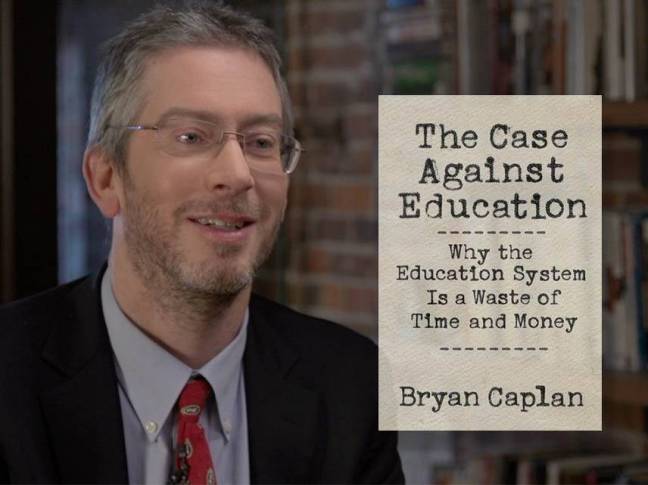
Bryan Caplan on the Case Against Education

This show’s guest is Bryan Caplan (youtubemp3), Professor of Economics at George Mason University whose latest book is *The Case Against Education: Why the Education System is a Waste of Time and Money*. In this book Bryan makes the point that if we judged education based on how much, as adults, we use what we learned in school, we’d have to admit it’s a shocking waste of time and resources:

David Wright: I remember the first time it occurred to me. I was in third grade gazing out the window and I figured this whole racket was basically just free babysitting for my parents, ah, was I right?

Bryan Caplan: For young kids it’s definitely that, but there’s definitely a lot more going on. Schools definitely teach skills, most obviously literacy and numeracy. But then a big thing that’s going on is that you’re jumping through hoops trying to impress future employers.

Now employers don’t know what you’re actually doing in third grade but since the whole system is so cumulative and sequential.. basically in third grade you’re getting ready for forth grade and fourth grade for fifth grade and so on. And then Junior High and middle school you’re getting ready for high school and high school then is preparing you for college. So very often what you’re learning you’re going to use in a subsequent class. It is used for gatekeeping. But then it’s finally, when you get a job, that’s when the stuff you learn you can safely forget.

Instead, education is about signalling qualities you need to succeed in the workplace. That means more education doesn’t really benefit society!

Bryan Caplan: So the problem is this: when you go and get a better degree this selfishly raises your earnings because you look better but it does not enrich society in the same way. If everyone were to go and get a college degree this would not mean that everyone is good in the same way. This would mean you now need additional degrees in order to convince employers of your awesomeness and we can see very clear empirical evidence of this that over time there’s been massive credential inflation this means if for one and the same job you now need a lot more education to be considered worthy of employment.But if the whole society gets more credentials this doesn’t make the whole society better instead this means that employers will say what’s so great about a high school diploma, almost everyone’s got one now so now you’ve got to get more… as a result there’s this rat race…

So what kind of a world does Bryan want? One with a lot less education spending:

Bryan Caplan: I call it educational austerity. If very wide access to education has caused fruitless credential inflation then reducing access will cause fruitful credential deflation and basically go back to a world where you can get a good job out of high school right so this is the main thing that I push. I talked about a lot of different ways you can cut spending there’s so many different possibilities. I’ve got a blog post on 47 ways to cut spending right so I’m agnostic but there’s just not much research on what’s the optimal way to cut education spending. It’s just not a big topic as you might guess.

And of course we talk about actuaries…

David Wright: Why don’t more people go into vocational jobs?… By training I’m an actuary and that is in some ways I vocational job because I (only) have a bachelor’s degree but it’s it seems to me quite an interesting sector because there’s no other there’s no other profession I think that would be a comparable to actuary where you don’t have to get a graduate degree and so that school system doesn’t hold the keys to the Actuarial profession.

… so I think vocations are great and I think that they’re underrated go by our society why do you think that might be?

Bryan Caplan: Basically there is a pile of government money in favor of the status quo and the status quo is a modest modification of the system from Oxford and Cambridge, right, so basically modern colleges have the fingerprints of early [inaudible] was basically there to train the elite for Law and Medicine and the Ministry…

and one of the main things that education signals is sheer conformity.

I have to admit I remain uncomfortable with the length to which Bryan follows the logic but this book is much more convincing than you’d expect.

We much more than the above, including Bryan’s very interesting idea of the Ideological Turing Test, that just because education is signalling doesn’t mean it doesn’t work and the impact of educational signalling on the civil rights movement!

At The Coal Face of Insurance Analytics

Ladies and Gentlemen, welcome to the coal face of insurance analytics.

Today’s guest is Jim Weiss, the director of analytic solutions for ISO. ISO houses perhaps the richest insurance data repository on the planet and among Jim’s responsibilities is building models that don’t use it! I joke.. Actually, Jim is exploring new frontiers of modeling for insurance purposes. This episode works very well in conjunction with the Cathy O’Neil episode which of course I recommend you listen to right away!

Right out of the gates Jim discusses his view on whether big data in insurance is overrated or underrated:

Jim Weiss: I think if you were gonna write a history of big data in insurance ending today, I would probably have to say that maybe big data in insurance is a little bit overrated. If you look at our industry in recent years, I think it’s kind of a graveyward of big data and analytics type projects that went overbudget overdeadline. I think there were a lot of factors contributing to that, but they can largely be characterized as maybe we’re not doing these projects very well but moreover we’re not picking these projects very well.

Jim on proxies:

Jim Weiss: I feel it’s very difficult to identify something to predict risk behavior that isn’t a proxy unless you’re doing individual risk rating. Unless you’re using something like prior claims to predict future claims, what variable isn’t proxy-ing for something? [From there we talk about my own history as a teenage driver (not great)!]

Jim on how good we are at what we do:

Jim Weiss: Myself and a colleague did a study of some rate level reviews that had been conducted in our industry over the past several years to see how many of them reversed themselves over one or two years.

David Wright: change signs.

Jim Weiss: Not even change signs, substantially reverse themselves. So you have a plus five rate percent rate indication. You notify your agents, you put it in your systems, you sent out hte policy holder notices. you tell the regulators you do eerything you ahve to do. you spenda ll that money, time and effort. then one or two years later. boom, negative five. Completely reversed…

Luckily in the study we did, the majority of the time at the time the rate level indications didn’t reverse themselves within one or two years. It did happen a little bit more often than perhaps I would think.

DW: why do you think that would have happened.

JW: because, Yogi Berra has an expression that making predictions is hard, especially about he future. Ther are so manythings you don’t know at the time you make the analysis.

Finally, in my favorite part of a conversation full of big insightful moments, we discuss whether and how to use complex modeling (and what on earth is modeling for?!):

Jim Weiss: I think, to some degree, applying the smell test to the types of variables you’re looking at, ‘is there some basis in reality’, can be a healthy thing, but I don’t htink it should be preclusive of exploring more complex approaches where prudent. But I’m not sure pricing is necessarily the prudent place for it. It may be but there are a lot of use cases for big data and analytics and sophisticated techniques in our industry which far transcend pricing.

and later..

Jim Weiss: the mix of complicated problem and complicated solution is a particularly problematic one… if you don’t really understand why exactly the approach you’re taking does solve that problem then how do you know it’s not a coincidence.

David Wright: I’m wondering what the objective is of modeling. So one characterization of the objective of modeling is to get an answer you can use. So I get a rate, or I get a loss estimate. I wonder if the real objective is to develop an understanding of the problem. Which is a human consumable… So the output isn’t the answer the output is the story.

This conversation was jam packed with fantastic stuff and the time we spent together flew by. Thanks to Jim for his time and the opportunity to learn! Subscribe in iTunes, stitcher, or by rss feed.


The Not Unprofessional Podcast

thinking-chimp_card

This episode is an experiment. Actuaries need to attest to having done 30 hours a year of continuing education and three of those need to be in what we call “professionalism” which can loosely be thought of as ethics for actuaries. Satisfying these is a pain so I thought I’d do something about it.

In this conversation with Don Mango, we discuss a series of cases (some listed below) that I thought might be interesting to interpret in the context of the actuarial code of conduct. Quite unexpectedly I had more fun with this one than maybe any of the previous interviews, which is saying quite a lot!

I won’t pretend this is for everyone but I suggest to give it a listen, even if only to hear our thoughts on Bitcoin, what a stock trader is to do if choosing between lying and screwing their client and many other examples (to actuaries: I promise it’s about actuaries!).

I’m also looking into a dedicated podcast for professionalism CE credits. If you’re interested, go to notunprofessional.com to sign up to a mailing list about that project.

Disclaimer: actuarial members, you of course need to use your own judgement on whether this podcast satisfies the CE guidelines. I’m counting it for mine, though!

The below are the cases we discuss with my own notes. Many ideas are shamelessly stolen from Matt Levine’s newsletter. If you don’t know Matt Levine drop everything and subscribe to his daily newsletter. It’s brilliant.

* Bitcoin (of course there’s a bitcoin section!)
Amazing article by Matt Levine describing the insanity that is Bitcoin. from 12/19/2017

Words lose their value in society. Things like ‘crazy’, ‘insane’, ‘madness’ get devalued because we use them for everyday things. Which brings me to Bitcoin. This shit is crazy.

It is hard to believe that anyone commits securities fraud anymore. Right now you can design an electronic token, say in big bold letters that the token is utterly useless, and raise $700 million selling it to people who “don’t think it’s fair reading into that language too tightly.” Why bother to scam anyone?

* what is advice?
from Matt Levine 1/3/18
One problem with making banks charge for research is: What is research? We talk from time to time about “desk commentary,” which is a thing where someone at a bank emails a client with a trade idea, but the person at the bank is not a “research analyst,” and the trade idea is not a “research report.” If you are in the business of regulating research — as U.S. regulators long have been, and as European regulators now are — then you have to distinguish a salesperson selling a trade idea from a research analyst selling research. That is not necessarily easy, as the ultimate goal of both salespeople’s emails and research analysts’ reports is, after all, to get clients to do trades. And in early going MiFID’s distinction might be crude:

“Solicitations from traders looking to pick up business from the buy side will drop significantly as the regulations stipulate that all research must be paid for. Money managers are even taking steps to block emails from those firms that have been dropped from their broker lists.”

It’s going to be weird if the only emails that money managers are allowed to receive are the ones that they pay for.

Isn’t this interesting context for assessment of an actuary’s work!

* Brokers enabling predation

From Matt Levine 12/14 email

DW: Brokers who tell clients that a large position is being liquidated. Bad, on the surface, but how can they drum up the liquidity? They need to say *something*! Shows that liquidators definitely get scrweed in this situation.

* Judge applying economic logic
12/15/2017
Michael Dell took Dell private at 13.75 per share vs its stock price of 9.35. They were sued for the price being too low. And a judge agreed! Violates EMH massively and has all kinds of inconsistencies that led to the creation of EMH. This judge was out of his depth but would an actuary be if he were in such a chair?

DW: This is an exmaple of when a judge has applied his duty but it was clearly nuts! I wonder if that kind of thing happens to actuaries.

* how about when immoral activity hinges on intentions?
Matt Levine 11/15/2017

A fun thing to do, if you are a trader at a bank, is to trigger stops. If a customer has an order to sell a thing when it gets to 80 or below, and it is currently at 82, then you might consider selling the thing short to push down its price to 80. At 80, you know someone else will be selling, because you have a customer order to sell at 80. So you sell short at 82 and 81, and the stop triggers, and your customer pukes out her position at 80, and you go ahead and buy in your short at 80 or 79 or whatever, making a nice little profit.

This is fun but also obviously very much frowned upon. It is not good customer service: Your customer put in the stop order to limit her losses, and you went ahead and handed her exactly the losses she was worried about. It is probably — using even a reasonably narrow definition of the term — “front-running.” In the foreign exchange markets, it is forbidden by the FX Global Code (Principle 10). It’s probably illegal most places. But at least in theory, it might be hard to prove: Maybe you sold at 81 to lay off risk, or to accommodate customers, or because you foresaw the market moving against you. How can anyone prove that you did it to trigger stops?

The answer is usually “because you sent your colleagues dumb chat messages high-fiving about how you made so much money triggering stop orders,

* disclosing conflict. When is it ok to violate?
check this out:

http://www.ethicalsystems.org/content/conflicts-interest

Disclosure is often proposed as a solution to conflicts of interest, but research finds that disclosure is often ineffective. Years of research on the ?anchoring bias? (Tversky & Kahneman, 1974) suggest that once bad advice is let out of the bag, its impact on judgment is difficult to undo. Indeed, disclosure may even have perverse effects and can sometimes make matters worse. For example, disclosure can make advisors feel free to give worse (i.e., more biased) advice because advisees ?have been warned? (Cain, Loewenstein, & Moore, 2011). Also, disclosure can pressure advisees into satisfying the advisors? disclosed interests, because these interests are now common knowledge and are begging to be satisfied, just as a panhandler puts pressure on passersby to donate (Sah, Loewenstein, & Cain, 2013).

PRECEPT 7. An Actuary shall not knowingly perform Actuarial Services involving an actual or potential conflict of interest unless:
(a) the Actuary’s ability to act fairly is unimpaired;
(b) there has been disclosure of the conflict to all present and known prospective Principals whose interests would be affected by the conflict; and
(c) all such Principals have expressly agreed to the performance of the Actuarial Services by the Actuary.
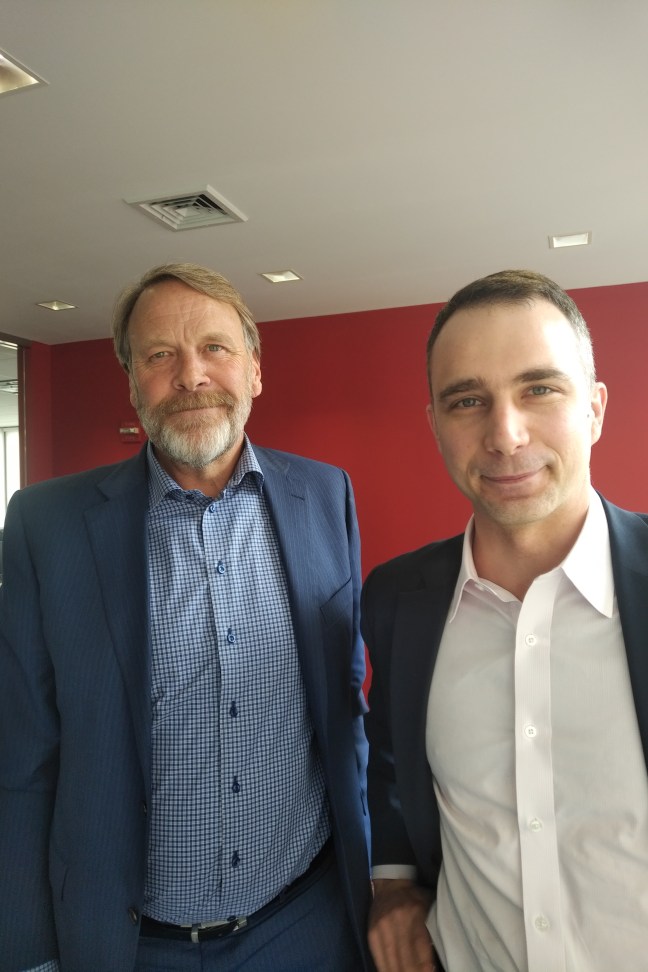
Turning Reinsurers Around With Joe Taranto

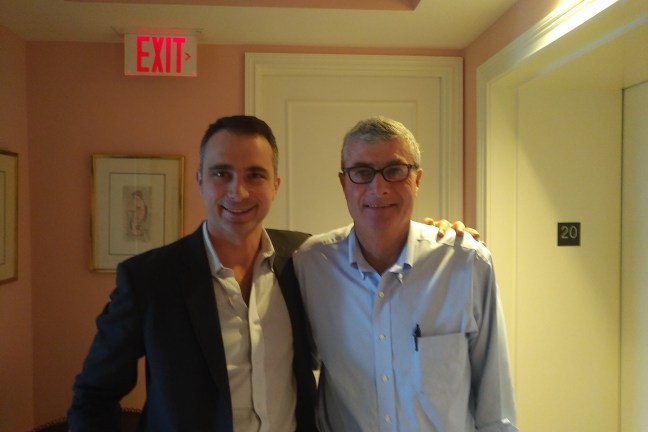
Joe Taranto is one of the most successful reinsurance executives in the last 40 years. He has turned around and taken public two reinsurers who even today are very prominent and successful companies: Transatlantic Reinsurance Company and Everest Re, the latter of which he spent 20 years leading as CEO and 10xing the firm over that period.
Joe started his career at AIG, a firm that has produced some of the most important leaders in the insurance business, Joe among them. We learn what is was like working there, Joe’s turnaround experienes, his strategy and philosophy of management and leadership.

Listen to whole thing!
If you enjoyed the show please subscribe in your favorite app, rate it on itunes and you can also sign up for periodic, short updates on content I produce, including these shows at webtrough.com/signup.

Robin Hanson Will Blow Your Mind

thinking-chimp_card

The latest guest on the Not Unreasonable Podcast (youtube link) is Robin Hanson (read his blog!)

Robin is one of the most original thinkers of our time. I’ll borrow a description from Bryan Caplan, who I think described him best:

When the typical economist tells me about his latest research, my standard reaction is “Eh, maybe.” Then I forget about it. When Robin Hanson tells me about his latest research, my standard reaction is “No way! Impossible!” Then I think about it for years.

Some time ago, Robin thought he had uncovered some ways to make the world a better place. He expected people to either agree or disagree. Instead he got indifference. How could that be? Does nobody care?

This led Robin to becoming an economist and, eventually, an answer: we aren’t motivated the way we say we are or think we should be. We do care, we just care more about other stuff. Stuff we don’t talk about. Those hidden motives are the subject of Robin’s new book (authored with Kevin Simler), The Elephant in the Brain.

From our conversation, some favorite excepts of mine:

Robin Hanson: Human behavior is consistently well adapted to its ancient environment. We are intelligent and clever about why we’re doing things. But then we have these conscious thoughts. We think we have a plan and follow that plan. But we mostly make conscious rationalizations for things we do. Most of the elephant in the brain is at this conscious level. The level of the reasons we tell ourselves we are doing this. And those reasons are just wrong compared to the reasons we actually have.

We are actually good at following the actual reasons we have, but the disconnect is when we try to explain it.

From earlier:

Robin Hanson: Once farming became possible, it was only possible because of human cultural plasticity. If we had just kept the same sort of norms and behaviors we had as foragers we would still be acting a lot like animals.

With our cultural plasticity we could create new norms. There was a new set of behavior that was the right behavior and a new set of things that were the wrong sort of norm violating behavior. It took a while but the farming world was able to come up with a whole new set of norms and values and enforce those and that allowed us to live and work in a very different world. Intead of wandering around we stayed in one place. Instead of egalitarianly sharing we had property and inequality. Instead of intermittent violence and mostly peace we had war and a lot of it. And we had so many things that were different than what foragers did.

And later:

Robin Hanson: Lately wealth has been dramatically increasing per person and that’s the other big trend over the last few centuries and that’s been causing most of the cultural trends you see. So humans are primed to act differently when they’re rich than when they’re poor. That’s an explantion for why we have increased leisure, art, travel, decreased violence, increased democracy, decreased fertility, decreased religion.

David Wright: Is it the case that foragers, then, are in some ways wealthy?

Robin Hanson: Anthropologists called them the original affluent society. They’re affluent in some ways but not others. They don’t have a lot of material wealth but they have a lot of friendship, play, dance, music. They’re living in a world where when they do something that feels right it roughly works.

…We’re being rich like that in our leisure time but at work we’re hyper farmers.

Do listen to the whole thing!

In Love with Chaos with Michel de Lecq Marguerie

thinking-chimp_card

This episode features Michel de Lecq Marguerie. Michel, a most English sounding fellow with a most french sounding name, is one of the most creative deal makers I’ve ever met.

On paper his creativity shouldn’t surprise us: Michel is an accomplished musician, having won a scholarship to the Royal Academy of Music as a teenager. He was an unfocused student, however: “the rest of my education was pretty miserable.. I just wasn’t really engaged with it… I think I had a certain arrogance about music that I was involved in and assumed I was simply going to pursue a career in music like my father and like his father before him.”

Eventually realizing it wasn’t for him, Michel became singularly focused on supporting himself and managed to hustle his way into a job at Lloyd’s. Michel points out that hustle isn’t something that comes naturally to musicians and artists, and in music even he is a different guy: “On the music side funnily enough I would say I’m more on the passive side and actually I enjoy that”.

Michel in business was anything but passive, moving from London to Toronto to join the fledgling broker Beach & Associates. He found the feeling of an empty desk and the need to create something from nothing exhilarating. Eventually I asked “do you like pressure?” and this kicked off my favorite part of the conversation (around minute 52):

I do actually, I do. I think I like a bit of chaos as well… Since I left Beach, I think I’ve created more Chaos for myself. Which I.. I think I love it.

Michel’s love of high pressure situations made him a natural entrepreneur and he credits that path to unlocking his own super power (my words) of creative deal making.

In the interview we also cover what it means to be creative in reinsurance, how Michel’s interview while racing around London in a porche went and what it felt like picking up the pieces (literally) of his office after the IRA bombing of Bishopsgate.

Let none of these adventures mislead you. Michel is one of the most effective reinsurance brokers alive. Credit that to his unique perspective on problems and pressure extreme enough to forge incredible skill.

If you’d like to receive emails when I post a new episode subscribe here. Please rate the show in iTunes! Music by http://www.bensound.com.

Intangibility, Economics 2.0 and What Makes A Modern Firm with Arnold Kling

thinking-chimp_card

We talk a lot about technological change but organizations are evolving, too, partly (maybe mostly) due to technology but this line of thinking also stands on its own. No less a celebrated thinker than Peter Drucker reserved a special place for organizational evolution in the innovation universe.

Recently there has been some progress on measuring changes to organizations, most prominently from a new book called *Capitalism without Capital* by Jonathan Haskell and Stian Westlake, which argues that what they call intangible assets are growing in importance.

Intangible assets are ideas, knowledge, aesthetic content, software, brands, networks and relationships. These sit collectively in the heads of employees of an organization and in some ways sit between theirs heads in that organizations are webs of relationships and collaboration. The framework the authors establish is that intangible assets have four qualities: they scale easily, their costs are sunk (you can’t sell them!), they are synergistic, in that the combination of these assets supercharge their effect and they create positive spillovers outside of the firm itself. Intangible assets are most effectively exploited by large organizations.

Other research supports this by pointing out firm margins are increasing but startup rates have declined! This paints a complicated picture and I wanted to find someone to help me think it through.

My guest today, Arnold Kling, has been an early commenter on these trends, publishing essays in the 90s and early 00s discussing declining variable costs (link) and the intangible economy (link to book). He has an incredibly unique perspective in that he has a mainstream economics education (completing his PhD dissertation at MIT under Nobel Laureate Robert Solow) but also started, grew and sold an Internet business in the 90s (see his story here).

There were three themes to the conversation that I thought were excellent.

  1. Management! Perhaps THE thing that distinguishes the modern firm from the (soon to be) extinct is the ability to manage software development. It is hard and a distinct business process that needs to be mastered. The best companies of today take the ability to do great software and apply it to many different businesses. One model of Silicon Valley is that it is a repository of software engineering and management expertise to be dumped on every industry on earth.
  2. Firms are changing and the reading Capitalism Without Capital is a good way to learn about how. But Arnold argues that some of this has always been there and we are just measuring things better (though still not perfectly).
  3. I didn’t even realize it until this conversation but I’ve been drawn to Arnold’s work because it makes sense to me in a way most economics doesn’t outside of a few core concepts. Economics tends to glide over what makes businesses work. Arnold, as a former entrepreneur himself, makes no such mistake.

Read Arnold Kling!

Addendum: Arnold comments and found our conversation interesting enough that he published an essay on Medium about it. An excerpt:

Twenty years ago, management in book retailing meant deciding where to place stores in shopping centers, deciding which books to stock, and creating displays that attracted customers. But now, Amazon has instead made the management of software teams crucial for its book retail business. What we mean today by “management in book retail” is different from what it used to mean.

Economic textbooks describe business leaders as if their job were to aggregate machines and homogeneous workers to produce output. Sixty years ago, this might have been a fair approximation. At that time, many large firms had been started and were being run by men without much formal education, relying instead on experience and grit.

But today, business strategy is more complex. Getting the most out of highly-skilled employees is more challenging. Making the best use of computer technology requires a careful analysis of how new developments affect the business environment.

https://www.buzzsprout.com/126848/608155-intangibility-economics-2-0-and-what-makes-a-modern-firm-with-arnold-kling.js?player=small