Ugh… More on Facebook

I’m bored of talking about Facebook but I can’t stop myself.

Two essays (here and here) present the apotheosis of Facebook hating (as a business model). Here’s a quote that about sums it all up. I think.

Facebook is not only on course to go bust, but will take the rest of the ad-supported Web with it.

I say ‘I think’ because the authors present all kinds of complicated analysis extrapolating their hating on facebook to hating on display advertising in general. “It’s a bubble!” and whatnot.

I don’t know, I’m sure they’re very smart, but I can’t figure any of it out.

So let’s just leave it to the marketplace. There are two groups of businesses: those that advertise on Facebook and those that don’t. If Facebook’s products are awesome, it’s going to make its clients rich by making their businesses ridiculously successful. And those businesses will push out the non-Facebook businesses. And Facebook will rule the world.

If not, then the Facebook’s clients will fail from wasting time and money on Facebook ads and Facebook will have no clients. And Facebook will die.

So let’s just wait and see!

The Thrill Of The Chase

Well there is one inescapable fact about the Facebook IPO: there’s a lot of poop in this bed. Just about everyone seems in on it:

  • From a purely technical trade execution perspective, the NASDAQ was in complete chaos
  • The bankers PROBABLY mispriced the biggest tech IPO ever
  • The bankers ALLEGEDLY played fancy with revenue disclosure
  • The bankers DEFINITELY lost boatloads of dough ‘supporting’ FB shares on Friday so the institutions could scurry away once they realized their orders got filled
  • As with any headline-smashing bungle, the legal locusts approach

Good detail here.

Members of the peanut gallery giggle with shadenfreude when the big boys look like idiots, and why not? We spend enough of our time reading about their bonuses and driving by their mansions wondering what it’s like to be rich. Let’s have some fun, too.

But don’t pretend that you know better. It’s not just MS: every single major bank was involved in this mess. So either me and every other Monday Morning QB would do the same in their boots or whatever would stop us from doing the same would also prevent us from getting into those boots.

So what’s the story? Could it just be that everyone got so caught up in the hype? Who knows.

We do know that Facebook didn’t need the money. This was purely paying off back compensation so everyone would just shut up and get back to coding. To the God Emperor of Facebook, the IPO must have been the most annoying of distractions.

So social dynamics played a part: like with so much in life, salesmen only chase to sell you things you don’t need. Was this the most greatest game ever played of ‘Hard to Get’?

I wish I had a satisfying theory. In my mind, I keep coming back to Chris Dixon’s excellent evaluation, which I’ll quote again:

A more likely outcome is that Facebook uses their assets – a vast number of extremely engaged users, it’s social graph, Facebook Connect – to monetize through another business model. If they do that, the company is probably worth a lot more than the expected $100B IPO valuation. If they don’t, it’s probably worth a lot less.

It’s early days for this company still and it may always be thus.

The Market is Smarter Than You

Two pretty different links here:

1. Scott Sumner is really starting to get good at nailing down his view. It’s been fun watching his writing sharpen up over the last few years. Nobody who cares about macroeconomics can afford to ignore his blog:

In recent months central banks have resorted to using the phony “credibility” issue.  The claim is that they had to fight hard in the 1970s and early 1980s to get markets to believe they were serious about inflation.

Fortunately, that is simply not true.   Markets have little difficulty figuring out what central banks are up to.  When the central bank wants to reduce inflation (as they did after 1981) markets believe them.  When they didn’t want to, markets didn’t believe they’d lower inflation.  There never was a credibility problem.

…I’ve frequently argued that interest rate targeting is like a car with a  steering wheel that locks when you need it most–on twisty mountain roads with no guardrail.  I’ve also argued that although we rarely hit the zero rate bound in past recessions, it may well become the norm in future recessions.

2. David Merkel (who holds the opposite macro philosophy to Sumner, incidentally) with a couple good stories. I like this comment:

rapid growth in financial institutions is rarely a good thing; it usually means that an error has been made.  Two, there is a barrier in many financial decisions, where responsible parties are loath to cry foul until it is way past obvious, because the cost of being wrong is high.

Insurance companies are excellent long term investments if they’re boring. They’re boring because they can’t really grow quickly, because if they do they will die.

The smartest P&C (Re)insurers I know of have a very simple strategy: sit on your hands for about 75% of your career and pray your investors don’t fire you for it. When the market turns step on the gas. Repeat.

The effectiveness of that strategy is proportional to how much you are in the business of assuming insurance risk. Think of the insurance world as a spectrum from support businesses (IT vendors, auditors, etc) which are more or less acyclical to Reinsurers which are completely beholden to the cycle.

From least to most insurance risk:

IT vendor -> broker -> MGA -> Berkshire Hathaway ->  insurer -> Reinsurers

BRK gets its own spot because  it’s an interesting mix of ‘normal’ businesses and insurance businesses. It’s the ability to put their capital to work in something that doesn’t care about the soft market that makes them unique. They DO something with that 75% of their time.

When the market is hard, insurance is an excellent business to be in: entrance is difficult, and the mass extinction of the turn scares the bejesus out of less skilled underwriters. Finding a strategy that lets you capitalize on that but doesn’t handcuff you to soft market valuations is a big deal.

Facebook IPO – Smart Money Slips Up?

The VCs and Zuck’s employees got paid today. But not by me.

Here’s one skeptical take.

The Facebook IPO has priced at $38, at the high end of its revised range, representing a market cap of $108.6B, assuming exercise of vested options.

The price is about 26 times trailing revenues and 104 times earnings, which discounts 66.2% compound annual growth over the next 10 years.  In comparison, Google grew at a 42.4% CAGR in the 8 years after it hit the $4B revenue milestone.

As consumer Internet use shifts decisively toward mobile platforms, Facebook’s ability to monetize their position is constrained by the control that Apple and Google have over 3rd party Apps.

GM’s repudiation of its Facebook ads is also troubling, calling into question the efficacy of ads, even on the browser platform.

Here’s some general detail:

“I think that the market was not there for this many shares,” said Michael Pachter of Wedbush Securities. “They priced it right if the goal was for the stock to trade flat [um… so they priced it properly? -DW], but it appears that the addition of 50 million shares on Wednesday night caused a supply/demand imbalance, and the market appetite wasn’t sufficient to support the stock above issue price.”

Some analysts believe the offering was priced too high, maximizing the return for the company itself, but not leaving sufficient room for an upside in trading — or that first-day pop that many Internet debuts have experienced.

If my company IPO’d with a first day pop I’d be spitting nails furious. Not today, and good. So what happens when there isn’t a pop? Well, it might mean you priced it correctly. It might also mean you priced it too high and the Investment Banks mask the error by aggressively making a market to support the flippers (via).

“Stabilization is the bidding for and purchase of securities by an underwriter immediately after an offering for the purpose of preventing or retarding a fall in price. Stabilization is price manipulation, but regulators allow it within strict limits – notably that stabilization may not occur above the offer price. For legislators and market authorities, a false market is a price worth paying for an orderly market.

They’re buying up those shares to save face. The beneficiaries? The lieutenants who got paid:

Multi-million dollar mansions and $100,000 Porsches are flying off local shelves in the Palo Alto, Santa Clara and Menlo Park areas of California. And the charge of luxury living is being led by a group of young entrepreneurs and techies as well as investors and venture capitalists that have scored famously from Facebook’s Nasdaq debut.

More Angel investors, more startups to come.

Addendum: holy cow, the WSJ has an awesome graphic of who sold:

One Last Pivot

The key question when trying to value Facebook’s stock is: can they find another business model that generates significantly more revenue per user without hurting the user experience?…

If they do that, the company is probably worth a lot more than the expected $100B IPO valuation. If they don’t, it’s probably worth a lot less.

That’s Chris Dixon.

I personally don’t like sponsored content in my feeds and Chris makes some good observations on those. GM isn’t convinced either.

My favorite test for a business’ viability is this: people only spend *real* money to make money. If your business isn’t better than your competitors at helping other people get rich, you don’t get rich.

I like Chris’ perspective, which is that Facebook is an incomplete product at the moment. And you can’t predict pivots.

Links

1. Dear women of the world: don’t become a doctor. It literally isn’t worth the money.

2. Dear managers of the world: use your time wisely.

3. Dear self: read Peter Thiel’s class notes a few more times and think about them.

Quick comments on #2:

Companies live and die by their managers’ productivity. Some managers work insane hours and are willing to sacrifice every other aspect of their lives. These are more productive in an absolute sense. They waste lots of time, too, but eventually get to what’s important.

Some managers have uncommon insight into what problems their companies should solve and so get through the same amount of work with less wasted time. This, by the way, probably infuriates subordinates with a less clear understanding of corporate mission: their pet priorities get short shrift.

The rest fail.

Today In Too Good To Be True

Here’s a post by an “Appreneur” who appears to have made good money selling Apps:

“In just over two years, I’ve created and sold three app companies that have generated millions in revenue. Two months after launching my first company, one of my apps averaged $30,000 a month in profit. In December of 2010, the company’s monthly income had reached $120,000. In all, I’ve developed more than 40 apps and have had more than 35 million app downloads across the globe. Over 90 percent of my apps were successful and made money.”

And the secret…

Don’t hate; Emulate! When you follow in the footsteps of successful apps, you will have a better chance of succeeding because these apps have proven demand and an existing user base. This takes the guesswork out of creating great app ideas.

I can’t stress the importance of emulating existing apps enough. It’s easy for people to fall in love with their own idea, even if the market doesn’t show an appetite for it. But this is one of the costliest errors you can make.

Unfortunately, developers make this mistake all the time. They focus on generating original ideas and spend a lot of time and effort creating those apps. When it doesn’t work out, they go to the next untested idea, instead of learning from the market. Often times, they repeat this cycle until they run out of money and dismiss the app game. This doesn’t have to be your experience.

Considering the wellspring from which his inspiration comes, it’s amusing that he spends almost an entire step (#6 of 10) discussing the NDA:

You must protect your ideas, source code, and any other intellectual property. These are the assets that will build your business, so you need to have each potential programmer sign an NDA before you hire them. Yes, it’s rare to have an idea stolen, but it does happen.

So let’s just say the ideas aren’t that important. How about all that development and design?

Coding your own app, especially if you’re teaching yourself at the same time, will take too long. The likelihood of you getting stuck and giving up is very high. It will also be unsustainable over the long run when you want to create several apps at the same time and consistently update your existing apps. After all, the goal is to get your time back and escape the long hours of the rat race. Therefore, programmers will be the foundation of your business. They will allow you to create apps quickly and scale your efforts.

Hiring your first programmer will be a lengthy process.

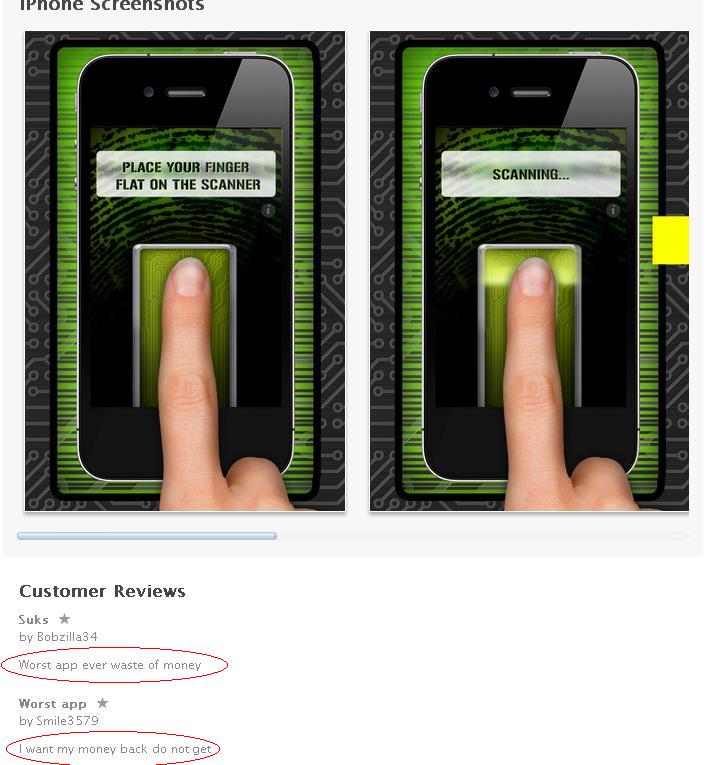
And his apps? Well he posts his “wireframes” of one of his apps and I found the real thing on iTunes:

Not too compelling. Here’s Chris Dixon:

A fundamental principle of business is that you do things in house that you think can give you a competitive advantage and outsource things that you don’t. At an early-stage technology company this means you do in house: product design, software and/or hardware development, PR, recruiting, and customer relations/community management. Ideally, most of these activities are led by founders.

All very sensible. But if this guy outsources ideas AND development AND the one app he referenced in the article appears to really suck (“An” Emoji app is also referred but there are many of these) what is making him all his money?

Finally, for those who’d like a copy of my NDA template (along with the checklist I use when hiring a new coder), email a copy of your receipt for App Empire, my comprehensive book on app development and marketing, to bonus (at) appempire.com. The book goes into depth on advanced marketing and monetization techniques, including how to put your business on cruise control (automate).

This calls for a new Word of The Day!

Buy High, Says Venture Capitalist

Here is a post by Steve Blank, a venture capitalist, identifying a fact:

Facebook takes our need for friendship and attempts to recreate that connection on-line.

Twitter allows us to share and communicate in real time.

Zynga allows us to mindlessly entertain ourselves on-line.

Match.com allows us to find a spouse.

At the same time these social applications are moving on-line, digital platforms (tablets and smartphones) are becoming available to hundreds of millions. It’s not hard to imagine that in a decade, the majority of people on our planet will have 24/7 access to these applications. For better or worse social applications are the ones that will reach billions of users.

Yet they are all only less than 5-years old.

Here is his inspirational conclusion:

It cannot be that today we have optimally recreated and moved our all social interactions on-line.

It cannot be that Facebook, Twitter, Instagram, Pandora, Zynga, LinkedIn are the pinnacle of social software.

All of these things are true. And here’s his opening line: “The quickest way to create a billion dollar company is to take basic human social needs and figure out how to mediate them on-line.”

I think he needs to shift to past tense, there.

The most influential personal/enterprise software companies in the early 80s were Apple and Microsoft. And who are they today?

No need is ever satisfied perfectly, but there is such a thing as a big head start. Surely it’s more likely that the Instagram acquisition represents the end of the disruptive phase of this technology trend.

Innovation comes from working on a need that you have that isn’t yet satisfied. The best itches to scratch are ones people will pay you for, obviously. And as a general rule, the market price for something is typically about as much money as someone else can make with it.

Social media is a bit different, much like newspapers, radio, TV and other advertising-driven businesses were different. These are super-scalable goods with the ability for pinpoint market segmenting. All very exciting, but their economic function is simply to make insurance more efficient.

I’d be more inclined to think that the next wave of billionaires will attack the problem of process inefficiency more directly. History tells us that this usually happens by elminating processes entirely.

My favorite disruption came soon after this:

In 1898, delegates from across the globe gathered in New York City for the world’s first international urban planning conference. One topic dominated the discussion. It was not housing, land use, economic development, or infrastructure. The delegates were driven to desperation by horse manure.

The horse was no newcomer on the urban scene. But by the late 1800s, the problem of horse pollution had reached unprecedented heights. The growth in the horse population was outstripping even the rapid rise in the number of human city dwellers. American cities were drowning in horse manure as well as other unpleasant byproducts of the era’s predominant mode of transportation: urine, flies, congestion, carcasses, and traffic accidents.Widespread cruelty to horses was a form of environmental degradation as well.

Data Science

The Netflix competition will probably go down as the event that gave birth to the Data Science Era. Like all iconic events there was absolutely nothing groundbreaking or new about it, it was just the firs time a few trends came together in a public way: large scale data, a public call for solutions, a prominent relatively recent startup disrupting an ‘evil empire’ kind of industry. And a bunch of money.

And the winner’s solution was never used:

If you followed the Prize competition, you might be wondering what happened with the final Grand Prize ensemble that won the $1M two years later. This is a truly impressive compilation and culmination of years of work, blending hundreds of predictive models to finally cross the finish line. We evaluated some of the new methods offline but the additional accuracy gains that we measured did not seem to justify the engineering effort needed to bring them into a production environment.

To me it makes the whole thing an even better story as a cautionary tale in the differences between academic indulgence and commercial needs.

Perfect is often the enemy of good.

Reverse Engineers

Leaky, a car insurance comparison website, ran into a problem:

The problem? In order to compare the insurance prices you’d pay with different providers, Leaky was scraping the data directly from the insurance companies’ websites. It sounds like Traff wasn’t entirely surprised by the letters (“We understood their objections and complied with them,” he says now), but he thought Leaky would have more time to fly under-the-radar while it figured out the best way to get its data. However, the high-profile launch made that impossible, and the site went offline after four days.

The solution?

Now Leaky is back, and it’s offering price comparisons based on a new data source — the regulatory filings that car insurance companies have to file with the government. Using those filings, the company has created a model that predicts, based on your personal details, how much each insurance provider will charge.

I presume he means the rate filings insurers give to regulators (I smell an actuary in there somewhere!). This is a fascinating project but I’m pretty pessimistic.

The web startup model, as I see it, is to build something geeks love, piggyback on the free advertising in the startup press and wait to get bought out by someone who has the platform to actually bring your product to the masses.

Leaky is offering no product, though. They’re offering replica pricing. Oh, but it’s so close to the real thing!

That means Leaky is no longer getting its prices directly from the providers, but Traff says the new model is making predictions that fall within 3 percent of the actual prices.

First lesson in stats: means mask the tails of the distribution. There’s plenty of wiggle room in 3% average deviation (if that’s what he means) to make this product completely useless.

Car insurance is not unlike car manufacturing. I remember reading an interview with Carlos Ghosn where he was lamenting that the only way to make money is to have huge scale in auto manufacturing and the only way to get that scale is to kill your margins.

Online platforms, like manufacturing plants, are a colossal capital outlay. As soon as it’s up insurers need to pour money into advertising to get people to the site. Sure you’re cutting out the broker, but you need to pay Google and network TV to get the word out and promise (cross our hearts) that your deals are actually cheaper.

And the real cheap deals only come occasionally as a carrier grasps for market share. Leaky can’t predict that from the rate filing.

So the only way to improve on the existing model is to compare real quotes from real insurers. Online players killed the broker a long time ago, they aren’t going to let him back in now.