Where The Skills Are

Here’s a graph to think about:

My goodness!

It would be really interesting to see this broken down by industry, which I’ve had a quick look into but have been stymied by the BLS website for now. I’m sure the data is there but blogging is taking a firm back seat to studying until I’m past my exam later this week.

Baby boomers aren’t going to retire like their parents did because they can’t. And that’s very good for the economy because they’re a damn productive bunch for the most part.

I’ve forgotten where I saw this graph first as it’s been sitting in draft limbo for a few days…

Low Hanging Mirages

Consider what the effects of this kind of regulation are:

Antonios Avgerinos, 59, a retired army pharmacist, always wanted his own pharmacy here. And why not? Greek law ensures that pharmacists get a 35 percent profit on all drugs sold, even over-the-counter medications.

But Greek law also limits just about everything else about pharmacies. They must be at least 820 feet apart and have a likely market of no fewer than 1,500 residents. To break into the business, an aspiring pharmacist generally has to buy a license from a retiring one. That often costs upward of $400,000.

The goverment, through its extensive regulation of pharmacies, has created an asset that is traded between retiring pharmacists and aspiring ones. There is no good reason why this needs to be the case and this is a fantastic example of free lunch deregulation, right?

Well, as soon as you deregulate these pharmacies, you destroy $400,000 of paper wealth for every pharmacist in the country. The macroeconomics of that are probably tolerable, but the politics are absolutely toxic. No politician wants to tangle with a highly educated group of cornered wolverines fighting for their nest eggs.

Among other strategies, they can probably point to dozens of other equally ridiculous regulations that should be struck down first. Until they wise up and realize that by teaming up with these other interest groups they can create an invinciple coalition against reform.

And what if all of these incumbent interests borrowed money to pay for their licenses? That means that reform will also wipe out the debt they owe, which means the banks lose out. Those banks can hardly afford that, can they! Suddenly fixing a ridiculous regulation has morphed into economic self-annihilation.

Now consider how this story plays out in other countries. Here in the US a lot of wealth has been chenneled into rising house prices, probably for stagnationist reasons, and now you have a similar situation for housing reform. Can’t tell everyone you’re going to destroy 10-15% of their GROSS wealth, particularly if that equals 115% of their net wealth. And then there’s the banks.

I posted on the politics of the anti-loose-money coalition, basically saying that it’s not demographics because the policy responses to 2008 and 1931 were the same while the demographics were far far different.

Well, Steve Waldman was gracious enough to comment, mostly citing cultural and intellecutal advances since the 30s. I’m skeptical and responded by pointing out one huge similarity between the monetary mistakes of today and the 1930s: DEBT.

That graph isn’t an awesome one because in a big bad crisis both the numerator and denominator are changing in erratic ways, relative to history. And deflation really complicates the analysis. I’m not gonig to parse the data myself today, though, so I’ll go on and just make my point.

Which is that too much debt is toxic for lots of reasons, most particularly because it chains policymakers to the status quo. You can’t loosen up monetary policy because you destroy too much wealth and perhaps spur a banking crisis.

You can’t raise rates either: consider China, where interest rates are probably too low. Their growth model has been a debt-fueled investment boom (see Michael Pettis for more on this) which, Japan has taught us, usually ends with too much debt and too much useless crap. But if you have too much debt, raising interest rates is suicide at roll-over.

I’m trying to tie together a common story through all this, which is that there are often problems in an economy and sometimes these problems get really bad. Debt makes it really really difficult to get out of these problems and once the market realizes this, NGDP forecasts drop. Then you have a Krugman-Sumner recession, which I think of as simply an expression of our straightjacket.

If we had control of the economy, we’d get out, but if we had control we’d never have gotten in in the first place.

Pencils, Pins and “Dope Tracks” — How Dead White Guys Run The Music Business

Specialization is one of the three or four absolutely fundamental concepts in economics. And there are some iconic discussions of its virtues: try Adam Smith’s pin factory story for one:

Those ten persons could make among them upwards of forty-eight thousand pins in a day… But if they had all wrought separately and independently… they certainly could not each of them have made twenty, perhaps not one pin in a day;

And how about Leonard E. Read’s famous I, Pencil story. “Who can make me?”, asks the Pencil of his readers. Trick question:

…not a single person on the face of this earth knows how to make me. This sounds fantastic, doesn’t it? Especially when it is realized that there are about one and one-half billion of my kind produced in the U.S.A. each year.

How can we make millions of pins and pencils when no person can make even one? Specialization: each person can make some part or machine that can make the final good.

Interesting enough, but rather dry stuff, which is why I delighted in reading this article about the music business. Who would have thought creative works would so easily succumb to improvements by division of labor and specialization?

Let’s start with a familiar player: the much-derided but hugely successful model of singer-not-songwriter:

Rihanna is often described as a “manufactured” pop star, because she doesn’t write her songs, but neither did Sinatra or Elvis. She embodies a song in the way an actor inhabits a role—and no one expects the actor to write the script. In the rock era, when the album was the standard unit of recorded music, listeners had ten or eleven songs to get to know the artist, but in the singles-oriented business of today the artist has only three or four minutes to put her personality across. The song must drip with attitude and swagger, or “swag,” and nobody delivers that better than Rihanna, even if a good deal of the swag originates with Ester Dean.

Who is Ester Dean? She’s one of the best hook writers (“top-liners”) in the business. Here’s a peek into her process:

After several minutes of nonsense singing, the song began to coalesce. Almost imperceptibly, the right words rooted themselves in the rhythm while melodies and harmonies emerged in Dean’s voice. Her voice isn’t hip-hop or rock or country or gospel or soul, exactly, but it could be any one of those. “I’ll come alive tonight,” she sang. Dancing now, Dean raised one arm in the air. After a few more minutes, the producers told her she could come back into the control room.

“See, I just go in there and scream and they fix it,” she said, emerging from the booth, looking elated, almost glowing.

“And they fix it”. There are more involved, you see:

Stargate went to work putting Dean’s wailings into traditional song structure. As is usually the case, Eriksen worked “the box”—the computer—using Avid’s Pro Tools editing program, while Hermansen critiqued the playbacks. Small colored rectangles, representing bits of Dean’s vocal, glowed on the computer screen, and Eriksen chopped and rearranged them, his fingers flying over the keys, frequently punching the space bar to listen to a playback, then rearranging some more. The studio’s sixty-four-channel professional mixing board, with its vast array of knobs and lights, which was installed when Roc the Mic Studios was constructed, only five years ago, sat idle, a relic of another age.

Within twenty minutes, Dean’s rhythmic utterances had been organized into an intro, a verse, a pre-chorus (or “pre”), a chorus, and an “outro”; all that was missing was a bridge. (Friday, the final day of the sessions, was reserved for making bridges.) Delaine, the engineer, who hadn’t said a word thus far, sat down at the computer and began tweaking the pitch of Dean’s vocal. Dean went back into the booth and added more words: “Give me life . . . touch me and I’ll come alive . . . I’ll come alive tonight . . .”

This is a high performing team that cranks out hits which then get picked up by established artists. They transact in a marketplace which, astonishingly for an industry obsessed with copyright, has poorly defined property rights:

The top-liner is usually a singer, too, and often provides the vocal for the demo, a working draft of the song. If the song is for a particular artist, the top-liner may sing the demo in that artist’s style. Sometimes producers send out tracks to more than one top-line writer, which can cause problems. In 2009, both Beyoncé and Kelly Clarkson had hits (Beyoncé’s “Halo,” which charted in April, and Clarkson’s “Already Gone,” which charted in August) that were created from the same track, by Ryan Tedder. Clarkson wrote her own top line, while Beyoncé shared a credit with Evan Bogart. Tedder had neglected to tell the artists that he was double-dipping, and when Clarkson heard “Halo” and realized what had happened she tried to stop “Already Gone” from being released as a single, because she feared the public would think she had copied Beyoncé’s hit. But nobody cared, or perhaps even noticed; “Already Gone” became just as big a hit.

It’s an interesting phenomenon that all of these various artists and musicians specialize increasingly narrow tasks. In every other industry this is called progress and the resulting products are inarguably better then their predecessors.

Can we say, then, that the music of today is in some way objectively superior to that of the past? As in the way that bridges and sprinters are better? If the comparison is possible, surely you have to say yes.

Links

1. Dear women of the world: don’t become a doctor. It literally isn’t worth the money.

2. Dear managers of the world: use your time wisely.

3. Dear self: read Peter Thiel’s class notes a few more times and think about them.

Quick comments on #2:

Companies live and die by their managers’ productivity. Some managers work insane hours and are willing to sacrifice every other aspect of their lives. These are more productive in an absolute sense. They waste lots of time, too, but eventually get to what’s important.

Some managers have uncommon insight into what problems their companies should solve and so get through the same amount of work with less wasted time. This, by the way, probably infuriates subordinates with a less clear understanding of corporate mission: their pet priorities get short shrift.

The rest fail.

When Economics Strikes

Speculation is rampant in Canada right now on whether and why retail prices are higher there than they are in the United States. See here and here, for instance.

As a Canadian that now lives in the US I can say that, anecdotally, things are cheaper here. Every trip back to the motherland is doubly painful: first the prices are higher, then the sales taxes twist the knife.

Well this is the report that’s sparked the furore, which has some real insights. Going in, I was expected tariffs to be the silent consumer killer. They definite contribute but for the most part the poor Canucks (who stay home) are up against plain old fashioned economies of scale.I highly recommend reading the relatively short report, particularly to see what they choose for their duty examples: talk about hitting where it hurts!

If the US didn’t exist, everything would be made in Canada. Introduce the United States and you massively expand the market and so the economies of scale available to producers. Prices go down.

But production isn’t the whole supply chain. There’s also distribution, of which some must necessarily be located near the consumer. Because of Canada’s smaller size, these operations are going to be less efficient. So this comment…

According to Statistics Canada, in 2009, operating profit margins in the retail sector were just above 3.4%. When compared to profit margins in the Unites States (Fortune 500 report on top industry performers – 2009) which were reported to be on average at 3.5%, one can see that retailer profit margins in Canada are the same or similar to those in the United States.

masks a very important truth: the profit margins may be the same, but this is very different from saying prices are the same.

Prices are higher because expenses are higher. Expenses are higher because Canadian companies are less efficient because they aren’t as big. Here’s a great summary from the paper:

“In summary, there were four main interrelated reasons that retail shelf prices were different in Canada compared to the U.S.

The first is scale; Canadian wholesalers and retailers had a smaller scale compared to their U.S. counterparts.

Second, the structure of the Canadian distribution channel included an extra participant, an importer or subsidiary operation, compared to many U.S. distribution channel structures.

Third was the input price to the channel. Prices charged by manufacturers for goods destined to be sold in Canada were frequently higher than in the United States.

The fourth and final reason was the cost of doing business. Factors such as occupancy costs – principally rents – and corporate taxes were higher in Canada at the time.”

US companies can justify higher prices to Canada because Canadian companies can’t do anything about it. These higher US prices are probably still below what a Canadian company could muster using domestic scale only. And there are administrative and other costs that the US company won’t want to bother dealing with without extra profit.

Witness also a window into the future. Some day it will be Chinese and Indian companies with their colossal domestic scale throwing their weight around the local and, to a lesser extent, world markets. The Canadian story will be played out in the Koreas, Japan, Vietnam, Pakistan, Indonesia, etc etc etc in the years to come.

To be middle class in Nepal will one day be to live in a consumer paradise. Well, if it weren’t for the mountains.

A Challenge to Interfluidity’s Point – Demographics of 1929 vs 1975 vs 2009

I posted this too soon. Here is a snapshot of the demographics of the USA in the last three episodes of monetary instability: 1929, 1975, 2009.

1975 looks far more like 1929 than either does like 2009. What is the explanation? That Milton Friedman’s lesson was taught in the interim? That the Gold Standard messed everything up? Not sure… Here’s Scott Sumner:

While campaigning for re-election in 1932, Herbert Hoover bragged that although the economy was looking a bit weak, voters could take comfort in the knowledge that his adroit leadership had preserved the dollar/gold peg.  Soon after, that old regime was swept away by a political and economic tsunami.

That rhetoric suggests the politicians weren’t as beholden to the median-aged voter as they supposedly are today.

My source data is here, here and here.

Why We’ll Never See Inflation Soon

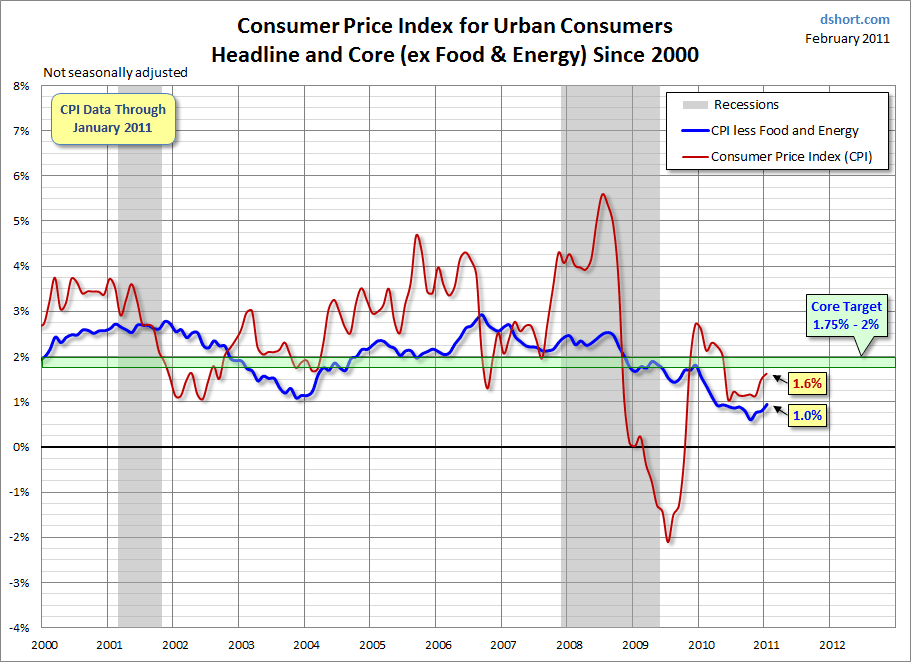
Many people like to look as this graph and freak out:

That monetary base expansion has GOT to mean massive and rampant inflation, right? I mean, Milton friggen Friedman said so!

And for many that means the gold price has to go up (which it has). Yet we have base increase and gold up, but no inflation!

Here is Interfluidity with an answer that, finally, I really really like.

In short, unlike in the 70s, we don’t have inflation because we don’t want it. Surprised? Read on:

The conventional story is that, during a downturn, election-seeking politicians will be recklessly pro-expansion, in conflict with and checked by an independent central bank. But, at least in the United States and Europe, there is surprisingly little appetite among politicians from “mainstream” parties to emphasize either fiscal or monetary expansion. On the contrary, the political conversation revolves around restraining deficits and “being responsible”, which is code for ensuring that the demands of creditors (public and private) are fully satisfied.

This is different from the 1970s, when elected officials did seem to behave as though they were accountable to unemployed people, and put central bankers under intense pressure to be accommodative. Something has changed. In status quo democracies, politicians tend to respond to groups that are numerous, rich, or organized. Since the 1970s, in all the depression democracies, retirees and near-retirees have grown both more numerous (as a fraction of voters) and more rich, while workers have grown less organized. Emerging markets like China have responded to the downturn quite differently. I think this pattern is too systematic to chalk up to idiosyncratic mistakes.

Japan, Germany, and France, more than 50% of the total population is over 40 years old. (56.5%, 57.2%, and 50.2% respectively.) They do have children in these countries, so there are many more retirees and working-age people over 40 than there are younger workers. In the US, “only” 45.5% of the population is over 40, but I think as a polity, the United States behaves as though it is substantially older, because its unusual fecundity (for a developed economy) comes from relatively poor and disenfranchised immigrants. By comparison, China’s over-40 share is 40.3%, Brazil’s is 32.8%, and India’s is 27.1%. In the 1970s, when the US policy was, um, plainly inflationary, the over-40 share of the population was 36.1%.

Using 40-years-old as a cut-off age is arbitrary. “Retirees and near-retirees” is a vague formulation, and 40+ is admittedly a stretch. But people do not turn suddenly into zombie-like asset hoarders. As cohorts of workers age, they accumulate financial assets and become less likely to face unemployment. When they retire, their fear of unemployment disappears entirely, and their dependence upon saved assets increases. There is a continuum between the young and poor, who should prefer the risk of stimulus, and the old and rich who should not. It’d probably be best to modify my story to declare “affluent retirees and older workers” the “median influencer”.

Today In Too Good To Be True

Here’s a post by an “Appreneur” who appears to have made good money selling Apps:

“In just over two years, I’ve created and sold three app companies that have generated millions in revenue. Two months after launching my first company, one of my apps averaged $30,000 a month in profit. In December of 2010, the company’s monthly income had reached $120,000. In all, I’ve developed more than 40 apps and have had more than 35 million app downloads across the globe. Over 90 percent of my apps were successful and made money.”

And the secret…

Don’t hate; Emulate! When you follow in the footsteps of successful apps, you will have a better chance of succeeding because these apps have proven demand and an existing user base. This takes the guesswork out of creating great app ideas.

I can’t stress the importance of emulating existing apps enough. It’s easy for people to fall in love with their own idea, even if the market doesn’t show an appetite for it. But this is one of the costliest errors you can make.

Unfortunately, developers make this mistake all the time. They focus on generating original ideas and spend a lot of time and effort creating those apps. When it doesn’t work out, they go to the next untested idea, instead of learning from the market. Often times, they repeat this cycle until they run out of money and dismiss the app game. This doesn’t have to be your experience.

Considering the wellspring from which his inspiration comes, it’s amusing that he spends almost an entire step (#6 of 10) discussing the NDA:

You must protect your ideas, source code, and any other intellectual property. These are the assets that will build your business, so you need to have each potential programmer sign an NDA before you hire them. Yes, it’s rare to have an idea stolen, but it does happen.

So let’s just say the ideas aren’t that important. How about all that development and design?

Coding your own app, especially if you’re teaching yourself at the same time, will take too long. The likelihood of you getting stuck and giving up is very high. It will also be unsustainable over the long run when you want to create several apps at the same time and consistently update your existing apps. After all, the goal is to get your time back and escape the long hours of the rat race. Therefore, programmers will be the foundation of your business. They will allow you to create apps quickly and scale your efforts.

Hiring your first programmer will be a lengthy process.

And his apps? Well he posts his “wireframes” of one of his apps and I found the real thing on iTunes:

Not too compelling. Here’s Chris Dixon:

A fundamental principle of business is that you do things in house that you think can give you a competitive advantage and outsource things that you don’t. At an early-stage technology company this means you do in house: product design, software and/or hardware development, PR, recruiting, and customer relations/community management. Ideally, most of these activities are led by founders.

All very sensible. But if this guy outsources ideas AND development AND the one app he referenced in the article appears to really suck (“An” Emoji app is also referred but there are many of these) what is making him all his money?

Finally, for those who’d like a copy of my NDA template (along with the checklist I use when hiring a new coder), email a copy of your receipt for App Empire, my comprehensive book on app development and marketing, to bonus (at) appempire.com. The book goes into depth on advanced marketing and monetization techniques, including how to put your business on cruise control (automate).

This calls for a new Word of The Day!

Buy High, Says Venture Capitalist

Here is a post by Steve Blank, a venture capitalist, identifying a fact:

Facebook takes our need for friendship and attempts to recreate that connection on-line.

Twitter allows us to share and communicate in real time.

Zynga allows us to mindlessly entertain ourselves on-line.

Match.com allows us to find a spouse.

At the same time these social applications are moving on-line, digital platforms (tablets and smartphones) are becoming available to hundreds of millions. It’s not hard to imagine that in a decade, the majority of people on our planet will have 24/7 access to these applications. For better or worse social applications are the ones that will reach billions of users.

Yet they are all only less than 5-years old.

Here is his inspirational conclusion:

It cannot be that today we have optimally recreated and moved our all social interactions on-line.

It cannot be that Facebook, Twitter, Instagram, Pandora, Zynga, LinkedIn are the pinnacle of social software.

All of these things are true. And here’s his opening line: “The quickest way to create a billion dollar company is to take basic human social needs and figure out how to mediate them on-line.”

I think he needs to shift to past tense, there.

The most influential personal/enterprise software companies in the early 80s were Apple and Microsoft. And who are they today?

No need is ever satisfied perfectly, but there is such a thing as a big head start. Surely it’s more likely that the Instagram acquisition represents the end of the disruptive phase of this technology trend.

Innovation comes from working on a need that you have that isn’t yet satisfied. The best itches to scratch are ones people will pay you for, obviously. And as a general rule, the market price for something is typically about as much money as someone else can make with it.

Social media is a bit different, much like newspapers, radio, TV and other advertising-driven businesses were different. These are super-scalable goods with the ability for pinpoint market segmenting. All very exciting, but their economic function is simply to make insurance more efficient.

I’d be more inclined to think that the next wave of billionaires will attack the problem of process inefficiency more directly. History tells us that this usually happens by elminating processes entirely.

My favorite disruption came soon after this:

In 1898, delegates from across the globe gathered in New York City for the world’s first international urban planning conference. One topic dominated the discussion. It was not housing, land use, economic development, or infrastructure. The delegates were driven to desperation by horse manure.

The horse was no newcomer on the urban scene. But by the late 1800s, the problem of horse pollution had reached unprecedented heights. The growth in the horse population was outstripping even the rapid rise in the number of human city dwellers. American cities were drowning in horse manure as well as other unpleasant byproducts of the era’s predominant mode of transportation: urine, flies, congestion, carcasses, and traffic accidents.Widespread cruelty to horses was a form of environmental degradation as well.

This Week In Space Travel

The price of a standard flight on a Falcon 9 rocket is $54 million. We are the only launch company that publicly posts this information on our website (www.spacex.com). We have signed many legally binding contracts with both government and commercial customers for this price (or less). Because SpaceX is so vertically integrated, we know and can control the overwhelming majority of our costs. This is why I am so confident that our performance will increase and our prices will decline over time, as is the case with every other technology.

The average price of a full-up NASA Dragon cargo mission to the International Space Station is $133 million including inflation, or roughly $115m in today’s dollars, and we have a firm, fixed price contract with NASA for 12 missions. This price includes the costs of the Falcon 9 launch, the Dragon spacecraft, all operations, maintenance and overhead, and all of the work required to integrate with the Space Station. If there are cost overruns, SpaceX will cover the difference. (This concept may be foreign to some traditional government space contractors that seem to believe that cost overruns should be the responsibility of the taxpayer.)

That’s Elon Musk

And is this related?

Space exploration company Planetary Resources will be unveiled in a conference call on Tuesday, April 24th. Besides the audacious announcement, which promises to “overlay two critical sectors — space exploration and natural resources — to add trillions of dollars to the global GDP,” what makes this unique is its high-profile support group. The venture is backed by Google executives Larry Page and Eric Schmidt, director James Cameron, and politician Ross Perot’s son, among others.

Chances any of this matters for regular folk?