Pencils, Pins and “Dope Tracks” — How Dead White Guys Run The Music Business

Specialization is one of the three or four absolutely fundamental concepts in economics. And there are some iconic discussions of its virtues: try Adam Smith’s pin factory story for one:

Those ten persons could make among them upwards of forty-eight thousand pins in a day… But if they had all wrought separately and independently… they certainly could not each of them have made twenty, perhaps not one pin in a day;

And how about Leonard E. Read’s famous I, Pencil story. “Who can make me?”, asks the Pencil of his readers. Trick question:

…not a single person on the face of this earth knows how to make me. This sounds fantastic, doesn’t it? Especially when it is realized that there are about one and one-half billion of my kind produced in the U.S.A. each year.

How can we make millions of pins and pencils when no person can make even one? Specialization: each person can make some part or machine that can make the final good.

Interesting enough, but rather dry stuff, which is why I delighted in reading this article about the music business. Who would have thought creative works would so easily succumb to improvements by division of labor and specialization?

Let’s start with a familiar player: the much-derided but hugely successful model of singer-not-songwriter:

Rihanna is often described as a “manufactured” pop star, because she doesn’t write her songs, but neither did Sinatra or Elvis. She embodies a song in the way an actor inhabits a role—and no one expects the actor to write the script. In the rock era, when the album was the standard unit of recorded music, listeners had ten or eleven songs to get to know the artist, but in the singles-oriented business of today the artist has only three or four minutes to put her personality across. The song must drip with attitude and swagger, or “swag,” and nobody delivers that better than Rihanna, even if a good deal of the swag originates with Ester Dean.

Who is Ester Dean? She’s one of the best hook writers (“top-liners”) in the business. Here’s a peek into her process:

After several minutes of nonsense singing, the song began to coalesce. Almost imperceptibly, the right words rooted themselves in the rhythm while melodies and harmonies emerged in Dean’s voice. Her voice isn’t hip-hop or rock or country or gospel or soul, exactly, but it could be any one of those. “I’ll come alive tonight,” she sang. Dancing now, Dean raised one arm in the air. After a few more minutes, the producers told her she could come back into the control room.

“See, I just go in there and scream and they fix it,” she said, emerging from the booth, looking elated, almost glowing.

“And they fix it”. There are more involved, you see:

Stargate went to work putting Dean’s wailings into traditional song structure. As is usually the case, Eriksen worked “the box”—the computer—using Avid’s Pro Tools editing program, while Hermansen critiqued the playbacks. Small colored rectangles, representing bits of Dean’s vocal, glowed on the computer screen, and Eriksen chopped and rearranged them, his fingers flying over the keys, frequently punching the space bar to listen to a playback, then rearranging some more. The studio’s sixty-four-channel professional mixing board, with its vast array of knobs and lights, which was installed when Roc the Mic Studios was constructed, only five years ago, sat idle, a relic of another age.

Within twenty minutes, Dean’s rhythmic utterances had been organized into an intro, a verse, a pre-chorus (or “pre”), a chorus, and an “outro”; all that was missing was a bridge. (Friday, the final day of the sessions, was reserved for making bridges.) Delaine, the engineer, who hadn’t said a word thus far, sat down at the computer and began tweaking the pitch of Dean’s vocal. Dean went back into the booth and added more words: “Give me life . . . touch me and I’ll come alive . . . I’ll come alive tonight . . .”

This is a high performing team that cranks out hits which then get picked up by established artists. They transact in a marketplace which, astonishingly for an industry obsessed with copyright, has poorly defined property rights:

The top-liner is usually a singer, too, and often provides the vocal for the demo, a working draft of the song. If the song is for a particular artist, the top-liner may sing the demo in that artist’s style. Sometimes producers send out tracks to more than one top-line writer, which can cause problems. In 2009, both Beyoncé and Kelly Clarkson had hits (Beyoncé’s “Halo,” which charted in April, and Clarkson’s “Already Gone,” which charted in August) that were created from the same track, by Ryan Tedder. Clarkson wrote her own top line, while Beyoncé shared a credit with Evan Bogart. Tedder had neglected to tell the artists that he was double-dipping, and when Clarkson heard “Halo” and realized what had happened she tried to stop “Already Gone” from being released as a single, because she feared the public would think she had copied Beyoncé’s hit. But nobody cared, or perhaps even noticed; “Already Gone” became just as big a hit.

It’s an interesting phenomenon that all of these various artists and musicians specialize increasingly narrow tasks. In every other industry this is called progress and the resulting products are inarguably better then their predecessors.

Can we say, then, that the music of today is in some way objectively superior to that of the past? As in the way that bridges and sprinters are better? If the comparison is possible, surely you have to say yes.

Links

1. Dear women of the world: don’t become a doctor. It literally isn’t worth the money.

2. Dear managers of the world: use your time wisely.

3. Dear self: read Peter Thiel’s class notes a few more times and think about them.

Quick comments on #2:

Companies live and die by their managers’ productivity. Some managers work insane hours and are willing to sacrifice every other aspect of their lives. These are more productive in an absolute sense. They waste lots of time, too, but eventually get to what’s important.

Some managers have uncommon insight into what problems their companies should solve and so get through the same amount of work with less wasted time. This, by the way, probably infuriates subordinates with a less clear understanding of corporate mission: their pet priorities get short shrift.

The rest fail.

When Economics Strikes

Speculation is rampant in Canada right now on whether and why retail prices are higher there than they are in the United States. See here and here, for instance.

As a Canadian that now lives in the US I can say that, anecdotally, things are cheaper here. Every trip back to the motherland is doubly painful: first the prices are higher, then the sales taxes twist the knife.

Well this is the report that’s sparked the furore, which has some real insights. Going in, I was expected tariffs to be the silent consumer killer. They definite contribute but for the most part the poor Canucks (who stay home) are up against plain old fashioned economies of scale.I highly recommend reading the relatively short report, particularly to see what they choose for their duty examples: talk about hitting where it hurts!

If the US didn’t exist, everything would be made in Canada. Introduce the United States and you massively expand the market and so the economies of scale available to producers. Prices go down.

But production isn’t the whole supply chain. There’s also distribution, of which some must necessarily be located near the consumer. Because of Canada’s smaller size, these operations are going to be less efficient. So this comment…

According to Statistics Canada, in 2009, operating profit margins in the retail sector were just above 3.4%. When compared to profit margins in the Unites States (Fortune 500 report on top industry performers – 2009) which were reported to be on average at 3.5%, one can see that retailer profit margins in Canada are the same or similar to those in the United States.

masks a very important truth: the profit margins may be the same, but this is very different from saying prices are the same.

Prices are higher because expenses are higher. Expenses are higher because Canadian companies are less efficient because they aren’t as big. Here’s a great summary from the paper:

“In summary, there were four main interrelated reasons that retail shelf prices were different in Canada compared to the U.S.

The first is scale; Canadian wholesalers and retailers had a smaller scale compared to their U.S. counterparts.

Second, the structure of the Canadian distribution channel included an extra participant, an importer or subsidiary operation, compared to many U.S. distribution channel structures.

Third was the input price to the channel. Prices charged by manufacturers for goods destined to be sold in Canada were frequently higher than in the United States.

The fourth and final reason was the cost of doing business. Factors such as occupancy costs – principally rents – and corporate taxes were higher in Canada at the time.”

US companies can justify higher prices to Canada because Canadian companies can’t do anything about it. These higher US prices are probably still below what a Canadian company could muster using domestic scale only. And there are administrative and other costs that the US company won’t want to bother dealing with without extra profit.

Witness also a window into the future. Some day it will be Chinese and Indian companies with their colossal domestic scale throwing their weight around the local and, to a lesser extent, world markets. The Canadian story will be played out in the Koreas, Japan, Vietnam, Pakistan, Indonesia, etc etc etc in the years to come.

To be middle class in Nepal will one day be to live in a consumer paradise. Well, if it weren’t for the mountains.

A Challenge to Interfluidity’s Point – Demographics of 1929 vs 1975 vs 2009

I posted this too soon. Here is a snapshot of the demographics of the USA in the last three episodes of monetary instability: 1929, 1975, 2009.

1975 looks far more like 1929 than either does like 2009. What is the explanation? That Milton Friedman’s lesson was taught in the interim? That the Gold Standard messed everything up? Not sure… Here’s Scott Sumner:

While campaigning for re-election in 1932, Herbert Hoover bragged that although the economy was looking a bit weak, voters could take comfort in the knowledge that his adroit leadership had preserved the dollar/gold peg.  Soon after, that old regime was swept away by a political and economic tsunami.

That rhetoric suggests the politicians weren’t as beholden to the median-aged voter as they supposedly are today.

My source data is here, here and here.

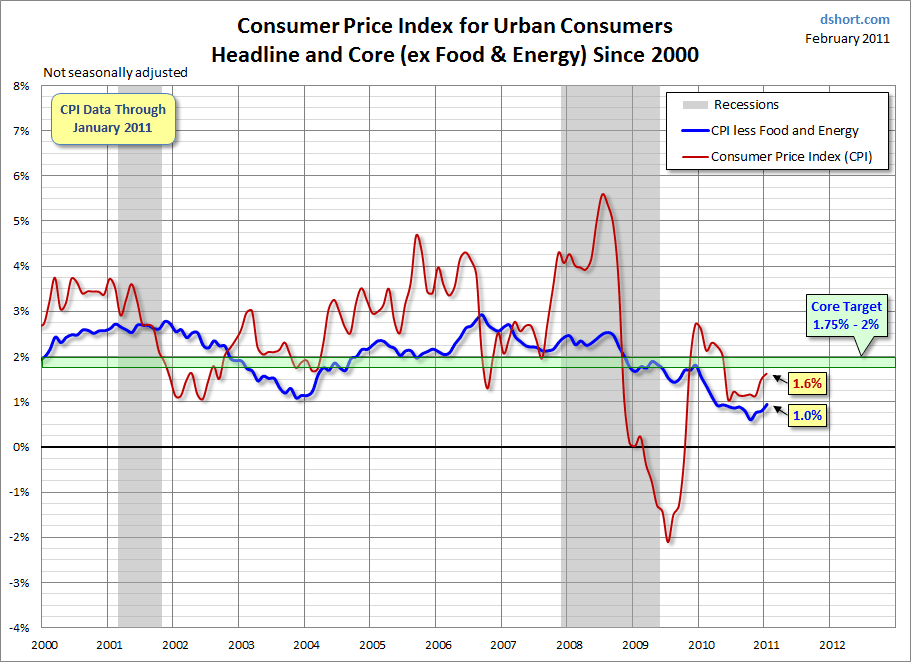
Why We’ll Never See Inflation Soon

Many people like to look as this graph and freak out:

That monetary base expansion has GOT to mean massive and rampant inflation, right? I mean, Milton friggen Friedman said so!

And for many that means the gold price has to go up (which it has). Yet we have base increase and gold up, but no inflation!

Here is Interfluidity with an answer that, finally, I really really like.

In short, unlike in the 70s, we don’t have inflation because we don’t want it. Surprised? Read on:

The conventional story is that, during a downturn, election-seeking politicians will be recklessly pro-expansion, in conflict with and checked by an independent central bank. But, at least in the United States and Europe, there is surprisingly little appetite among politicians from “mainstream” parties to emphasize either fiscal or monetary expansion. On the contrary, the political conversation revolves around restraining deficits and “being responsible”, which is code for ensuring that the demands of creditors (public and private) are fully satisfied.

This is different from the 1970s, when elected officials did seem to behave as though they were accountable to unemployed people, and put central bankers under intense pressure to be accommodative. Something has changed. In status quo democracies, politicians tend to respond to groups that are numerous, rich, or organized. Since the 1970s, in all the depression democracies, retirees and near-retirees have grown both more numerous (as a fraction of voters) and more rich, while workers have grown less organized. Emerging markets like China have responded to the downturn quite differently. I think this pattern is too systematic to chalk up to idiosyncratic mistakes.

Japan, Germany, and France, more than 50% of the total population is over 40 years old. (56.5%, 57.2%, and 50.2% respectively.) They do have children in these countries, so there are many more retirees and working-age people over 40 than there are younger workers. In the US, “only” 45.5% of the population is over 40, but I think as a polity, the United States behaves as though it is substantially older, because its unusual fecundity (for a developed economy) comes from relatively poor and disenfranchised immigrants. By comparison, China’s over-40 share is 40.3%, Brazil’s is 32.8%, and India’s is 27.1%. In the 1970s, when the US policy was, um, plainly inflationary, the over-40 share of the population was 36.1%.

Using 40-years-old as a cut-off age is arbitrary. “Retirees and near-retirees” is a vague formulation, and 40+ is admittedly a stretch. But people do not turn suddenly into zombie-like asset hoarders. As cohorts of workers age, they accumulate financial assets and become less likely to face unemployment. When they retire, their fear of unemployment disappears entirely, and their dependence upon saved assets increases. There is a continuum between the young and poor, who should prefer the risk of stimulus, and the old and rich who should not. It’d probably be best to modify my story to declare “affluent retirees and older workers” the “median influencer”.

How R Is Used

I don’t use R regularly, though I’m somewhat familiar with it. My work is in 90% Excel (the lingua franca of my world) and 10% Python, which I just plain like.

Yet here is a paper evaluating R’s design and how it is *actually* used. Neat.

We assembled a body of over 3.9 million lines of R code. This corpus is intended to be representative of real-world R usage, but also to help understand the performance impacts of different language features. We classified programs in 5 groups. The Bioconductor project open-source repository collects 515 Bioinformatics-related R packages.

The Shootout benchmarks are simple programs from the Computer Language Benchmark Game implemented in many languages that can be used to get a performance baseline. Some R users donated their code; these programs are grouped under the Miscellaneous category. The fourth and largest group of programs was retrieved from the R package archive on CRAN.

Some excerpts of the results:

We used the Shootout benchmarks to compare the performance of C, Python and R. Results appear in Fig. 7. On those benchmarks, R is on average 501 slower than C and 43 times slower Python. Benchmarks where R performs better, like regex-dna (only 1.6 slower than C), are usually cases where R delegates most of its work to C functions.

…Not only is R slow, but it also consumes significant amounts of memory. Unlike C, where data can be stack allocated, all user data in R must be heap allocated and garbage collected.

…One of the key claims made repeatedly by R users is that they are more productive with R than with traditional languages. While we have no direct evidence, we will point out that, as shown by Fig. 10, R programs are about 40% smaller than C code. Python is even more compact on those shootout benchmarks, at least in part, because many of the shootout problems are not easily expressed in R. We do not have any statistical analysis code written in Python and R, so a more meaningful comparison is difficult. Fig. 11 shows the breakdown between code written in R and code in Fortran or C in 100 Bioconductor packages. On average, there is over twice as much R code. This is significant as package developers are surely savvy enough to write native code, and understand the performance penalty of R, yet they would still rather write code in R.

…Parameters. The R function declaration syntax is expressive and this expressivity is widely used. In 99% of the calls, at most 3 arguments are passed, while the percentage of calls with up to 7 arguments is 99.74% (see Fig. 12).

…Laziness. Lazy evaluation is a distinctive feature of R that has the potential for reducing unnecessary work performed by a computation. Our corpus, however, does not bear this out. Fig. 14(a) shows the rate of promise evaluation across all of our data sets.

And the upshot:

The R user community roughly breaks down into three groups. The largest groups are the end users. For them, R is mostly used interactively and R scripts tend to be short sequences of calls to prepackaged statistical and graphical routines. This group is mostly unaware of the semantics of R, they will, for instance, not know that arguments are passed by copy or that there is an object system (or two)…

One of the reasons for the success of R is that it caters to the needs of the first group, end users. Many of its features are geared towards speeding up interactive data analysis. The syntax is intended to be concise.

Via LtU and here is an interesting discussion on this related video.

Today In Too Good To Be True

Here’s a post by an “Appreneur” who appears to have made good money selling Apps:

“In just over two years, I’ve created and sold three app companies that have generated millions in revenue. Two months after launching my first company, one of my apps averaged $30,000 a month in profit. In December of 2010, the company’s monthly income had reached $120,000. In all, I’ve developed more than 40 apps and have had more than 35 million app downloads across the globe. Over 90 percent of my apps were successful and made money.”

And the secret…

Don’t hate; Emulate! When you follow in the footsteps of successful apps, you will have a better chance of succeeding because these apps have proven demand and an existing user base. This takes the guesswork out of creating great app ideas.

I can’t stress the importance of emulating existing apps enough. It’s easy for people to fall in love with their own idea, even if the market doesn’t show an appetite for it. But this is one of the costliest errors you can make.

Unfortunately, developers make this mistake all the time. They focus on generating original ideas and spend a lot of time and effort creating those apps. When it doesn’t work out, they go to the next untested idea, instead of learning from the market. Often times, they repeat this cycle until they run out of money and dismiss the app game. This doesn’t have to be your experience.

Considering the wellspring from which his inspiration comes, it’s amusing that he spends almost an entire step (#6 of 10) discussing the NDA:

You must protect your ideas, source code, and any other intellectual property. These are the assets that will build your business, so you need to have each potential programmer sign an NDA before you hire them. Yes, it’s rare to have an idea stolen, but it does happen.

So let’s just say the ideas aren’t that important. How about all that development and design?

Coding your own app, especially if you’re teaching yourself at the same time, will take too long. The likelihood of you getting stuck and giving up is very high. It will also be unsustainable over the long run when you want to create several apps at the same time and consistently update your existing apps. After all, the goal is to get your time back and escape the long hours of the rat race. Therefore, programmers will be the foundation of your business. They will allow you to create apps quickly and scale your efforts.

Hiring your first programmer will be a lengthy process.

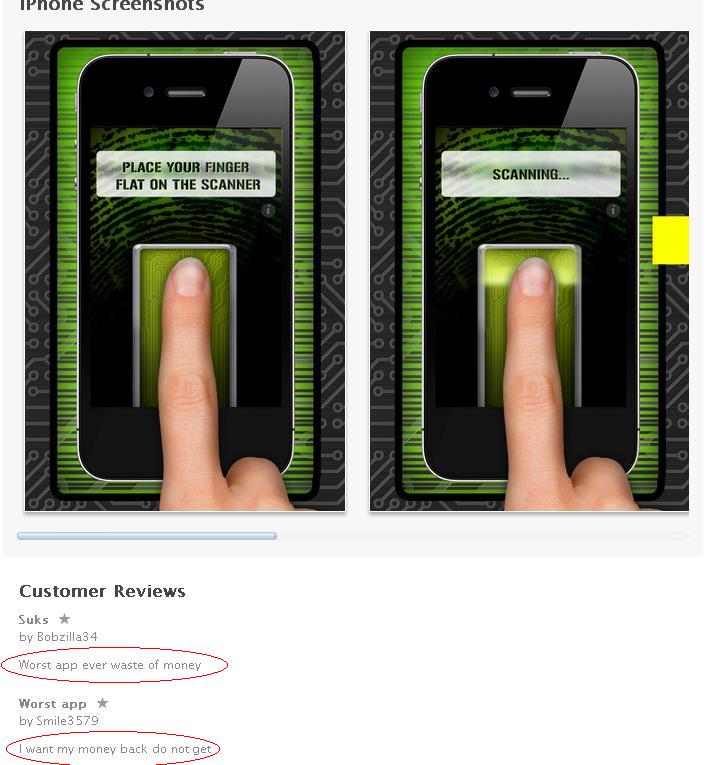
And his apps? Well he posts his “wireframes” of one of his apps and I found the real thing on iTunes:

Not too compelling. Here’s Chris Dixon:

A fundamental principle of business is that you do things in house that you think can give you a competitive advantage and outsource things that you don’t. At an early-stage technology company this means you do in house: product design, software and/or hardware development, PR, recruiting, and customer relations/community management. Ideally, most of these activities are led by founders.

All very sensible. But if this guy outsources ideas AND development AND the one app he referenced in the article appears to really suck (“An” Emoji app is also referred but there are many of these) what is making him all his money?

Finally, for those who’d like a copy of my NDA template (along with the checklist I use when hiring a new coder), email a copy of your receipt for App Empire, my comprehensive book on app development and marketing, to bonus (at) appempire.com. The book goes into depth on advanced marketing and monetization techniques, including how to put your business on cruise control (automate).

This calls for a new Word of The Day!

This Is Your Brain On Sports

My mother in law was over once while I was channel surfing and when I came to rest on a boxing match, said “Why would anyone want to watch this kind of brutality?” Sheepishly, I turned the channel.

There really is something a bit ridiculous about watching dudes punch each other in the head for fun. “But other sports are violent, too!” is usually my limp defense. Doesn’t even address the charge. If there was a way to limit the damage without really disrupting the sport, I’d support it.

BLH has a piece discussing some recent concussion research. Here’s the gist:

Preliminary results from a new brain study suggest that there might be a point of no return for some combatants. Essentially, there becomes a point where the brain can no longer repair itself and chronic traumatic encephalopathy (CTE) becomes inevitable. The symptoms of CTE include personality changes and general cognitive difficulties, much like Alzheimer’s disease.

So boxing is probably the most concussive of sports and it’s pretty easy, and accurate, to point the finger at that community first. But remember Ted Johnson, the subject of the NYT article about concussions in the NFL?

Asked for a prognosis of Mr. Johnson’s future, Dr. Cantu, the chief of neurosurgery and director of sports medicine at Emerson Hospital in Concord, Mass., said: ”Ted already shows the mild cognitive impairment that is characteristic of early Alzheimer’s disease. The majority of those symptoms relentlessly progress over time. It could be that at the time he’s in his 50s, he could have severe Alzheimer’s symptoms.”

Ted has CTE. And Sidney Crosby missing almost a whole season’s worth of hockey over two years for “concussion-like symtoms”? Here’s an important part of the research cited by this article and BLH:

As part of an ongoing study on brain health, the researchers divided 109 licensed boxers and mixed martial artists into three groups: those who had fought for less than six years, six to 12 years or more than 12 years. Their average age was about 29.

Participants underwent MRI scans to measure their brain volume and tests of their thinking and memory.

“In those that fought less than six years, we didn’t find any changes,” Bernick said. For that group, he said, “the more you fought didn’t seem to make any differences in the size of brain structure or their performance on some of the tests like reaction time.”

But for the other two groups of boxers and combat athletes, “the greater number of fights, the sizes of certain volumes of the brain were decreasing,” he said. “But, it was only in those that fought more than 12 years that we could detect the changes in performance in reaction time and processing speed.”

Concussive sports are for the young only. Most people think of athletes playing in a sport until their reactions slow, their strength wanes and they loose their speed.

The reality is that most athletes are ‘bubble’ players who only barely make their teams and retire after a season or two. Only the best of the best, who are overrepresented in our minds and on the sports pages, play until their bodies tell them to stop. And the reality for them is that the brain may be the first thing to go.

Forcing retirement from too many concussions would be a tragedy for the player and fans. Imagine if Crosby was forced to retire at age 23? Things like this will begin to happen. And rightly so.

It’s the concussion awareness era. If it’s true that the damage can be identified early enough to limit long term problems by forcing retirement then that’s what should happen.