Full Feed

Herding Peacocks

I chuckled to myself as I read about the integration of two big insurance broking houses:

Chris Lay will continue as CEO of the UK & Ireland. Adrian Girling, currently Chairman UK, Europe and South Africa for JLT, will become Chairman of UK & Ireland Corporate and Risk Management for Marsh and report to Mr. Lay. Nick Harris, CEO of Australia and New Zealand for JLT, will become CEO of Pacific for Marsh. Scott Leney, currently Marsh Pacific CEO, will become CEO for Australia and report to Mr. Harris. Andre Louw, currently Chairman of Australia and New Zealand for JLT, will become Chairman of Pacific for Marsh. Christos Adamantiadis will continue as CEO of Middle East & Africa (MEA). Peregrine Towneley, currently CEO of MEA for JLT, will become Chairman of Middle East for Marsh. Robert Makhoul, currently Marsh & McLennan Companies Chief Client Officer and Chairman of Middle East for Marsh, will continue as MMC Chief Client Officer for the Middle East. David Jacob will continue as CEO of Asia. Alan Cheah will continue as Chairman of Asia. James Addington-Smith, currently Asia Specialty Leader for March and April , will become CEO of ASEAN, a sub-region of Asia, reporting to Mr. Jacob. I am the only continues to be CELEBRATION of COMPANIES that are on the road Continental Europe. Ricardo Brockmann will continue as CEO of Latin America.

If that looks like a blizzard of CEOs and Chairmen and my goodness who is in charge here and who cares, anyway!.. be at ease.. you aren’t supposed to understand. That above paragraph is in fact a masterpiece of corporate communication. To see why, you first understand a critical truth about brokers: we are peacocks. 

A Peacock is a status hungry omnivore. Brokers tend to be scrappy and thick-skinned and entrepreneurial while carrying surprisingly sensitive egos. This ego is bolstered by two facts: they control their client book, making them powerful, and the best of them interact with the highest status ranks of client organizations, CEO, CFO, etc. Consequently brokers need to be intelligent and high status in their own right to ‘belong’ in those relationships. Threaten that and you imply they are impostors in their social circle.

Managing egos is delicate work. Here are three things everyone wants:

  1. Status
  2. Money
  3. Autonomy

Supply of these is finite and can be zero sum. Compensation is usually the easiest because salespeople tend to work on commission. Autonomy on the other hand is most constrained. The more one salesperson gets, the more likely she’s going to wander onto another’s turf.

Status is in the middle. It’s primarily mediated by titles and the supply of titles can be increased. Hence title inflation yields a whole slew of the most senior-sounding honorifics scattered around broking organizations.

You could be forgiven for thinking this is nothing more than a ruse to convince everyone they’re simultaneously better than everyone else. It’s not. The political reality of a sales organization is that there really are that many cooks in the kitchen.

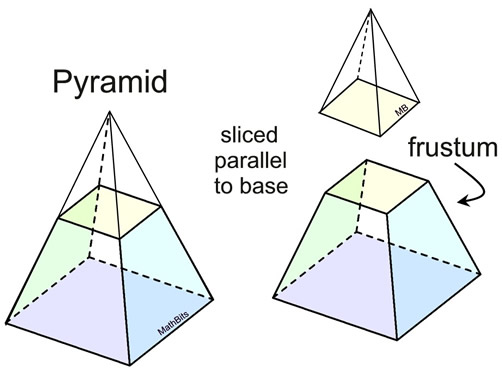
These organizations aren’t pyramids, they’re something called a frustum.. And clients like it because more of them can have access to the ‘top’.

Back to the quote above, which serves three purposes:

  1. It’s a scorecard on distribution of influence following a merger of two organizations. Everyone in my office tallied up the score of JLT vs Marsh appointments.
  2. It shows clients who to access to push the organization around.
  3. Finally, of course, it serves the most opaque function of a reallocation of status within the firm. What signals does senior management want to send? Who deserves the roles?

The thing that has surprised me most about management is how much of the success of the job is simply getting along with other managers. You have such a little amount of time to spend building rapport but interdepartmental collaboration is perhaps the most important difference between good and great companies. And this quality of being able to get along with others is radically undervalued, especially by those who don’t have it.

So managing broking organizations is hard but at least sales performance is famously solitary work. One broker’s failure is irrelevant to another’s success. This contrasts with managing empowered risk taking institutions like reinsurance companies or hedge funds where a bad decision from one cowboy can bring the whole house down. Since your fellow trader / underwriter can put you out of a job you’re gonna watch his ass. Yet at the same time these people are enormously skilled and need to feel nearly as empowered as a broker would to put that extra effort in to find great opportunities. What a balance to strike!

I’ll leave you with a clip from my conversation with Bart Hedges where he discusses exactly this problem. Enjoy!

Tyler Cowen Interviews Me!

While my interview guests are getting settled in I occasionally ask them to read out some of the actuarial code of conduct and we discuss it. I’m assembling those clips into some content for my paid actuarial continuing education channel which all actuaries should check out (and get those CE credits before year-end!).

When I did this with Tyler my little warmup act turned into an impromptu Conversations with Tyler where we explore what it means to be an actuary and whether he and I might start a competitor organization! We end with a discussion of fronting and I missed an opportunity to talk about how fronting can enable competition among insurers but that will have to wait for another day!
Listen to the (10 min) clip here!

Episode Transcript

Tyler Cowen:0:29Hello, this is Tyler Cowen, precept five an actuary who issues an actuarial communication shall as appropriate, identify the principals for whom the actuarial communication is issued and describe the capacity in which the actuary serves.

David Wright:0:47Any reaction to that?

Tyler Cowen:0:49I don’t understand it. It seems general enough, it’s probably true, uh, but legally what counts as an actuarial communication? I don’t understand. And, uh, to describe the capacity in which the actuary serves. Again, it sounds trivial, the appropriate, but what it means in practice. Uh, I, as an economist, I’m not qualified to say,

David Wright:1:10Well, I’ll give you a bit of insight on that. There’s a fear overall and it’s an implicit fear. We don’t actually talk about it. Have people misappropriating an actuarial work product. And so the thing with any kind of, I think deep analysis is that it’s subtle and it’s intended purpose is really important

Tyler Cowen:1:25correct

David Wright:1:25for actually the content of the communication and and undefined. You’re right, and they don’t really tend to define it very often. Sometimes people define actual work product as anything an actuary does and you kind of have to define a little bit broadly because of the possibility for misuse. So you email something out, right?

Tyler Cowen:1:39Right.

David Wright:1:39And it says, here’s what my conclusion is, and if you’re not an actuary, you might not understand it. You might take it and say it, that supports my purpose and send it onto somebody else and screw somebody or do something maybe not nefarious, but maybe a little bit misleading or misleading enough that the original actuary wouldn’t want you to do that. And when you would see this is not an intended purpose and I didn’t want you to be able to. I didn’t want to empower you in this way. Uh, I wanted to empower you in these specific ways and so we have to be very careful about defining the, the scope of any kind of work that we do because we are dealing with people who need what we do. So we’re empowered in a certain way but don’t understand what we do.

Tyler Cowen:2:14The real lesson to me is how much background context can be behind an apparently simple statement.

David Wright:2:19Absolutely. Yeah. Isn’t it interesting. And so one of the things that fascinates me, both these I think that the precepts are under appreciated and I think people tend, you have to read them or every year, every actuary has to spend three hours doing professionalism development. So reviewing one of the things that we have to do where they go to talks or seminars or we had to sit down and read the precepts of the code of conduct in 3 50 minute private sessions and then a test that you did it.

Tyler Cowen:2:42And what actually is an actuary legally speaking, is defined at the state level by a licensing process or is it by some other.

David Wright:2:49Great question. So it’s not. So it’s a private organization. It’s endorsed by state regulators for signing off,

Tyler Cowen:2:55So it’s a natural monopoly, somewhat like a credit rating agency or. I would.

David Wright:2:59It probably is. I don’t know that there’s any kind of legislative. So here’s one of the things about insurance was interesting is that it’s state regulated and so there’s this herd of cats being all 50 states. There’s no federal kind of charter of any sort. Now actuaries are. I’m thinking it might get this wrong. I think it’s. It’s not mandated as centrally, but I think that there’s this coordinating process for state regulators to collectively say actuaries are the ones who can sign off on the final statement of financial statements of insurance company insurance is opaque. It takes a long time for the cost to be realized and so you have to have somebody say this insurance company solvent because it’s not obvious that they’re solvent and it’s kind of given point in time and so the actuaries have that power to build a sign off on the financial statements. So there’s. There’s an arrangement there, but it’s not. You don’t have to go to university to be an actuary. It’s a. it’s like a trade,

Tyler Cowen:3:43But let’s say I, Tyler Cowen came along and set up the actuary certification company in New York state.

David Wright:3:48Yup.

Tyler Cowen:3:49And I decided, ah, these seven people that are actuaries, how far could I get with that? Is there a legal problem or just everyone would ignore me? I don’t know. I think everyone would ignore you. You would say, I picked seven really good people. You’re one of them and then next year, you know, I pick another 20 and five years from now I’m picking the best people and I’m doing slightly better than the supposed natural monopoly. Is that a contestable market or do I just have no chance there?

David Wright:4:12I think you have no chance and… But the thing is, I’m not totally sure what the mechanism for the failure is going to be. I think that I know that there you have to attest to the fact that you are an actuary when you sign off on financial statements, but that information comes from the actuarial body. Who, who, who actually.

Tyler Cowen:4:28Right.

David Wright:4:28You know who they write the exams, are they they build the exams that we have to pass to become sort of as an actuary. I don’t know where the mechanism is for the states to actually require that designation or or where it’s embodied in legislation anywhere. I think it probably is.

Tyler Cowen:4:40And what about cross border certification? Say I’m the best actuary in Canada and I want to do something in the United States. Is there a sort of free trade in that service or am I out of luck

David Wright:4:50no you’re out of luck. Well, in Canada

Tyler Cowen:4:52Is there any country where there’s cross

David Wright:4:53In Canada..

:4:54…European Union

David Wright:4:55In Canada there happens to be pretty close to one though. There’s one exam that’s different between Canadian actuaries and US actuaries, if you take. It’s like the accountants, so accountants, you have to actually have a recertification process to be an accountant in United States if you’re one in Canada, and so different countries have certain amounts of overlap between the educational qualifications. Canada is one of super, super close. The UK is not as much and some countries you can apply for an equivalence and you’d get your credential converted and sometimes that takes more work or less work. I don’t know that anybody has a real total clean shot in. I think anywhere you have to go, there’s some local knowledge you have to accumulate usually as embodied in an exam process or an or an application for an exemption from that.

Tyler Cowen:5:30How about within the European Union?

David Wright:5:32Uh, I don’t know. I think the UK is separate from the EU. The EU might be one. I’m not sure on that,

Tyler Cowen:5:38but if I’m a Croatian actuary I would be surprised if I could just show up in Germany and practice without hindrance.

David Wright:5:43I don’t know.

Tyler Cowen:5:44As a matter of fact, that seems to me one of those service areas where the EU is not really close to a free trade zone, at least not yet.

David Wright:5:51Well there. There’s another layer of complexity there because insurance is a, as it was a really long history of insurance. There was conflict between whether it’s a local or a national service. So you can think state regulation, right? It shouldn’t this be interstate commerce, you think it would be a lot of other financial services are not. And so there’s this hole and it’s a debate that kind of goes back and forth a little bit in the history of the regulation of insurance, but also just in the practice of the business as it is today. It’s a very, very local business. And you know, what’s amazing about insurance is that you’re an insurance agent in some small town and there was like, there’s like 3000 insurance companies in the United States compared to like how many smartphone makers, right? I mean this is a business which is non aggregated because the local relationships that people have, you know, and I think that this is, this has to do with what I like to think of insurance as a moral economy, which is like, it’s all really uncertain. We’re not sure what’s going to happen. So we’re going to have to trust each other a little bit here. And as a result, you trust people you know, and you liked the idea of having a local and it’s not something that I would choose myself. I’m with the big guys like lemony other people, but you’re living in a small town. I think you gain comfort from the fact you have a local agent, a local company that’s actually issuing your insurance policy and you’d like that. And so there’s this real low, you know, localization kind of idea. That’s in insurance. And so back to the EU example, it would surprise me if your Croatian actuary could go to German insurance companies because the Germans were like, we want the guys we know, right?

Tyler Cowen:7:05But say I’m a nationwide company, maybe I’m chartered in Delaware, but I’ve branches in all 50 states and I go to the Supreme Court and I say, I don’t want to be covered by any state regulator. I want to be regulated by the federal government. What would they say to me?

David Wright:7:20They don’t have. I mean, I think the federal government doesn’t have the legislative authority. They’re the way that

Tyler Cowen:7:24Well but the court could rule. I’m not saying they would, but what’s their argument for not doing so?

David Wright:7:28So I, I think right now there is actually a bit of legislative precedent or legislative structure for this where the federal government is allowed to regulate insurance where there is no state regulations. There was an act that was passed in the thirties, which correct. Which sort of clarified all of this.

Tyler Cowen:7:41What act was that?

David Wright:7:41Uh, I think it was McCarran Ferguson

Tyler Cowen:7:43McCarren. Yeah.

David Wright:7:44Yeah. And pretty important moment because at that point there was a supreme court ruling actually in the nineteen twenties that flipped from state to federal regulations reports that actually the precedent was wrong. This is really interstate commerce should be federal and then the whole thing blew up and they gave them like they think they gave them five years to figure it out and they said we’re going to, we’re just sort of set a ticker on this ruling and then the McCarran Ferguson passed and rewrote the rule book. And so federal regulation can exist. We’re a state. Regulation is not so state regulation is enshrined in the federal act, but if in some in some lines of business are federally regulated right now, you know there is a, there’s always this movement afoot and Dodd Frank at one point had a bit of a federal regulation of insurance conversion as a part of it and I don’t, I don’t. I think to some degree it did make it through in some degree it didn’t. So there’s always a tension there. So that battle is happening all the time actually. And, and you know, I’m not, I’m not aware of, you know, kind of a blow by blow analysis of it, but it’s not working. Staying state.

Tyler Cowen:8:33But you mentioned trust. So let’s say I’m in mostly a high trust country, but maybe a low trust state or province and I decide I want to do my insurance through Singapore because I trust them more than my local people. Does that ever happen? Is that the wave of the future or it really is about geographic distance.

David Wright:8:49It’s your, your insurance policy is, is as. You aren’t allowed to have one in the United States. If it’s not a federal, uh, not, not, not federally, if it’s not a regulated entity in the United States now.

Tyler Cowen:9:00But they could have a shell of some kind in the US, but the actual business is done in Singapore and I get on a plane to Singapore. I meet them, I shake their hand, I say, Oh, I trust Singaporeans. This is what I want to do. Sure.

David Wright:9:11So that can happen and that happens in my day job I do organize such arrangements periodically, but where it falls down, it’s not necessarily on a preference. It falls down because of the economics or the finance financial arrangement is just not profitable because if margins are too thin and insurance companies and you get to pay another another mouth in the chain just doesn’t make you don’t make any money so you can do it, but you won’t make any money doing it. If you wanted to pay more for it as a consumer, you could probably organize that and you said, yeah, well I’m going to be paying 20 percent more for my insurance premium if you wanted to do that. I could organize it for you tomorrow. And insurance policy through a federal relay Shell.. Front company on front companies, United States with the financial backing of somebody in Singapore. It does happen.

Tyler Cowen:9:47Can we put all this into my podcast too?

David Wright:9:49Absolutely. You got it. Um, okay. So that’s the warmup. Holy Cow.

Not Unprofessional Panel with Tom Le and Erik Hornick

Recorded at the Casualty Loss Reserve Seminar recorded in September 2018. We spent a bit more time tailoring the content towards Actuarial Topics or at last taking an actuarial angle on the topics presented. Send me an email at david at notunreasonable.com with feedback!

Here is Eric on Linkedin

Here is Tom on Linkedin

Blockchain! With Steve Mildenhall

This week I published (mp3youtube) my blockchain episode with Steve Mildenhall and reprised the topic with Steve for a talk at the Casualty Actuarial Society Annual Meeting (see the videos page!). These two ‘events’ were the culmination of a few months-long deep dive into the technology and application of blockchains, particularly for insurance.*

For the sake of this post I thought I’d put down some of the more important reference material for my blockchain education. These sources were invaluable. Enjoy!

Chris Dixon’s comment in this podcast that crypto currencies are the natural funding mechanism for networks was a powerful early aha moment for me:
https://a16z.com/2018/07/31/cryptonetworks-decentralization-web-scale-building-blocks/

Here’s Vitalik Buterin’s podcast with (NU Guest) Tyler Cowen (Vitalik invented Ethereum):
https://medium.com/conversations-with-tyler/vitalik-buterin-tyler-cowen-cryptocurrency-blockchain-tech-3a2b20c12c97

Here I learned a lot about the pre-history of bitcoin, which was embodied in BitGold, a precursor in many ways. It was in studying BitGold that I learned that the real innovation in Bitcoin was

  1. The social innovation of getting miners to collectively agree on the latest block by voting with their hashing power.
  1. One other difference was the decoupling of computing power and coins produced. Computing power is a waste product.

https://medium.com/@insearchofsatoshi/bit-gold-and-bitcoin-9357176cd420

and Szabo:
https://web.archive.org/web/20171118033020/https://unenumerated.blogspot.ie/2011/05/bitcoin-what-took-ye-so-long.html

Szabo on origins of money:
https://web.archive.org/web/20160921140955/http://szabo.best.vwh.net/shell.html

You can learn a lot about a technology by learning what the key incremental innovation was that made it work. Blockchains are a governance innovation, a *social* innovation.

Here is another good interview with Buterin:
https://www.youtube.com/watch?v=OaUOZxxbIz8

*I put together a ‘working’ insurance company on my home machine running a local Ethereum node and found the whole experience fascinating. If anyone is interested in seeing it I’d be happy to walk you through the thing.

Disrupting Insurance

Earlier this year I did a talk at the Casualty Actuaries of Greater New York spring meeting on disrupting insurance and I just posted it to youtube, check it out! The talk was a reprisal of this article I published in a reinsurance journal and updates some ideas.

A few big themes are explored here. First that insurance is more resilient than it might first appear. The talk starts with a geek-out session on disruption theory and how it might apply to insurance generally, concluding that when we talk about insurance disruption we really mean disintermediation. The entire insurance industry is an economic intermediary so to shortcut past them is by definition removing an intermediary!

I consider what it would take to disintermediate a few key institutions of insurance: brokers and regulated insurance entities. It ain’t pretty, which is why these institutions have survived for centuries. The market needs them!

I don’t mean to be a complete pessimist, of course. My heart lies with the barbarians, even if my mind is safely behind the gates. Insurance is tough but not invincible!

Terri Vaughan on the Financial Crisis and State Regulation

This episode features Terri Vaughan (mp3youtube), professor of actuarial science at Drake University and CEO of the NAIC during the Great Recession. We can call this the Not Unreasonable 10-year retrospective on the financial crisis. I first came across Terri’s work as an actuarial student and been fascinated ever since by her case for state regulation and citation of the insurers’ performance during the financial crisis as evidence in its favor. Here’s the gist:

Terri Vaughan: the traditional arguments that you will hear about state regulation are the laboratory the states. That’s the big one sure how states can experiment with different things. Diversity of markets. We need to be able to respond to local markets. I think one of the biggest strengths of state regulation is the diversity of thought. The fact that you don’t and this is something I think that as the any I see becomes a bigger and bigger force in regulation the states have to guard they have to really be focused on making sure that they maintain that diversity of thought. When I was a regulator and it’s still the case New York would think about things differently than Illinois. Yeah. And that would cause you to go to a meeting and really engage in a very deep conversation about how should we look at this issue.

David Wright: You have two different perspectives.. what’s right about each one.

Terri Vaughan: Yeah. Yeah and it was it was very it was thought provoking

David Wright: yeah, constructive

Terri Vaughan: constructive. I think that is a very powerful feature because it’s not a you know kind of people at the top making the decision and sending it down. It’s a very diverse you know way of looking at things and then you have to figure out how do we pull these two together. I think that’s one. I think the other big advantage of state versus federal regulation is leveling the playing field in the industry. And this goes back to the conversation we had earlier about who gets access in Washington. There’s so much responsibility in washing so much power in Washington who gets the access and the access or the ones who know the policy makers on a personal level. You know they they maybe their kids went to the same school and they go to the same country clubs or whatever. It’s a it is much tougher for a mid-sized company in Des Moines Iowa to have the kind of access

And on the feds:

David Wright: And it seems to me that that’s an inherent feature of Washington and feature of anybody who’s distant and smart who thinks I know more than you because I don’t know you so I’m going to assume the worst of you. And then I know that I’ve done so many good things with my look on my resume. Let me just figure it out. You know I can figure things out. It’s hard to talk them out of it! Because you can’t really dispute the premise in some ways. You can’t say no you’re not smart because you know they all know they are smart.

Terri Vaughan: Yeah they are smart but this is why I said there are smart people in the States too.. you know don’t tie their hands. Let them think it through and my experience with Washington is that too often it was about hand tying. And the more we can get now I’m showing my political kind of perspective the more that we can free the states from tying the hands of from Washington tying their hands and the better we’re going to be in this.

Finally, where is state regulation going?

David Wright: You mentioned earlier that you’ve made an allusion to how the NAIC may be keep may be growing importance and that I suppose relatively speaking means the states are receding in importance.

Terri Vaughan: And here’s what I think is happening. There’s a tendency when something new is created for example. We have principles based reserving on the life insurance side. And so you need to have expertise at the state level on principles based reserving. How do you look at these filings that the companies are making how we’re going to have the regulatory expertise in this new model of reserving and the tendency is to say well let’s create expertise at the NAIC and that expertise will then

David Wright: the smart guys, like the federal government.

Terri Vaughan: Exactly. Exactly. And then that will educate the states and I while you still have a system where the states are you know independently responsible and they have influences from their local market place. So they’re going to have they’re going to take this and learn from it differently. But it does create a. Different a different structure. It’s not just the NAIC staff there to facilitate this exchange of information among the states. It’s the NAIC staff driving how the states look at things and that I think is something that we need to be real careful about how we do that

We also cover the origins of insurance regulation, how and why she joined the NAIC, what it was like in Washington during the financial crisis and more! Terri has been a huge influence on my own thinking about our industry, it was an honor to have her on the show!

Transcript below:
Continue reading Terri Vaughan on the Financial Crisis and State Regulation

Tyler Cowen on Stubborn Attachments

This is a special interview for me because Tyler Cowen (mp3 including transcript, youtube) has been an enormous intellectual and moral influence on me over the last ten years or so.

I’m not alone. Tyler blogs with Alex Tabarrok at marginalrevolution.com, which is usually ranked as the top economics blog and Tyler as one of the most influential economists of the day. Tyler’s books (see below) are also enormously influential and you name your favorite economic or financial public intellectual and they probably read Tyler every single day.

The interview I’ve wanted to do with Tyler has been the “who is Tyler” conversation. Luckily he just wrote an entire book on what he values and why. That new book, Stubborn Attachments, is the foundation for Tyler’s entire value system. What an opportunity to dig in.

And yet I am so immersed in Tyler’s thinking that it’s hard for me to appreciate that you might not yet see why I think he’s worth understanding (and he is!). So down below I’ll put a quick run-down and reading list of some ideas and books that will help prime you for this conversation.

From my interview, here is the first question:

David Wright: I want to start with what I see as the most marginally important Cowenian contribution. For the sake of the audience, marginal in this case doesn’t mean small, it means that there are a lot of commentators and public intellectuals out there saying for the most part a lot of the same stuff. But given all the very smart people saying very smart things, where does Tyler stand out? What do you *need* to go to him for? My answer is it isn’t even Tyler… it’s Tyrone. I’ll defend this selection in a moment but can you explain to us who Tyrone is… and I don’t mean the name on his driver’s license, but you can tell us that, too. Who is Tyrone REALLY..

On how Tyler might have hatched the most important philosophical innovation in 2000 years. Really, you ask? You be the judge!

David Wright:…we read the ancient philosophers because they.. they’ve.. I’ll use my my word: infected our thinking and it’s the roots of quite a lot of current philosophical thought.. they wouldn’t have had a chance to think about compound growth and and in zero time preference right. So it seems to me this is actually a philosophical innovation the likes of which the world hasn’t seen in millennia. Could that be the case?

Tyler Cowen: Yes, you know.. Agnes [DW: Agnes Callard, CoT guest, see below] has one of the deeper understandings of ancient philosophy because she also has a Ph.D. in ancient history and has studied ancient philosophy and the view of many of the early Greeks was there’s something retrogressive about history or sect like so you advance for a while and then you move backwards. So it’s hard to keep a lot of compound returns was probably correct for them to believe that in their time. But we’re now in a world where at least say Great Britain since you know the 16 twenties or so has mostly had positive compound returns for centuries. And that’s a practical innovation and our theories need to adjust accordingly.

What I think is really going on in this book (and then get one-upped!):

David Wright: So I have a Straussian reading of this book and my Straussian reading is that

Tyler Cowen: I’m happy already by the way.

David Wright: It’s that it’s actually a sequel to Average is Over. And I know it’s not. But I would think of it as a sequel to average is over and I was listening to your podcast with Russ Roberts and in that he made the point or you made it I’m not sure who made it first but you were agreeing about the fact that Average Is Over which I’d like you to summarize if you don’t mind a moment I’ll give it my shot which is it’s about how there’s this.. in society there is going to be a big difference between people who are very good at the kind of development the technology that society is producing and then you have people who are not and you’re going to wind up with you know what Ross calls a bi-modal distribution which as you have you know a whole bunch of haves and a bunch of have nots and sort of hollowing out of the middle of society. And in that conversation you were talking about how really the book was not, as you put it, this is not normative in the sense that you weren’t really venturing an opinion on it saying this is good or bad this is kind of what’s happening. And I think that the Straussian reading of Stubborn Attachments is *that that’s not true*. It actually is a message to the have nots from Average Is Over and saying *just do it for your grandkids*.

Tyler Cowen: I agree with that. But I’ll see your bid and raise you a few…

This interview is so jam-packed with awesome moments including where I worry about the social status of venture capitalists (and Tyler tries to reassure me), who the Einstein of Journalism might be, Straussian readings of Conversations with Tyler, how Tyler consumes podcasts, how we value non-economic social phenomena and of course much, much more on Tyrone.

I needed this show to try to understand who Tyler really is and why and came away pretty satisfied! Big thanks to Tyler for his time and thanks for listening!

Tyler Cowen reading list:

I haven’t even told you about his daily links, yet. Read marginalrevolution.com!

How Arbitrage is Like Specialty Insurance

This episode (mp3, youtube) is about diving deep into a comparison between stock market arbitrageurs and specialty insurance underwriters. The idea for the show came from the guest, Rich Derr, an actuary at Nationwide Insurance Company’s specialty division and I love nothing more than falling down a well with someone comparing financial and insurance markets.

The original paper that inspired Rich is called The Limits of Arbitrage and doesn’t really contemplate insurance. That’s our job! I learned a lot in this conversation, actually, and some of the insights will stick with me a long time.

The paper has two really important ideas. The first describes what I’ll call ‘ironic opportunities’, which are situations where failure actually emboldens you to further action.

David Wright: It looks riskier and that’s the real core insight, isn’t it? When the position goes farther away from where you think it should be, it looks scarier.

Rich Derr: Yep. And especially if you don’t have that specialty knowledge, you’re looking at that position and as the investor, you’re going, wait a minute, you’re telling me everything’s fine, but you’re, you’re recognizing a loss and now you’re coming to me for more money. And where it gets even more fun is the arbitrageurs are saying not only that, but the opportunity is actually better right now. And so we need more capital to go heavier into that position. Um, and that’s, that’s the difficulty of the arbitrageur.

The second idea is that monitoring a specialist is incredibly hard, so capital providers can understand these that ironic opportunities exist in principle but you need to have limits to your ability to trust an arbitrageur. The solution is almost cruel in its simplicity: just look at their track record.

David Wright: So how do the capital providers decide whether to give you money or not?

Rich Derr: So that’s one of the key assumptions of this paper and it gets into the performance based arbitrage, sorry, performance based allocation. What they do is how they decide who gets the capital as they look at the historic experience of the arbitrageur because the strategies of the arbitrageur is so difficult that they don’t really understand it. So they’ll look at the historic results and say, hey look, historically you’ve done great, you’re going to get capital. Historically you’ve done.. meh.. you don’t get a lot of capital, but that kind of provides a disconnect, right? Because what you should be looking at is the expected results.

It’s fantasy football time. So just using that as an example, like if you just used the last year to judge what the players are going to do next year, you’re gonna you’re going to lose. You need to. You need to look at what’s the expected results are and that’s how they’re making the capital decision.

Both of these ideas map to insurance: you have ironic opportunities all the time in insurance and extremely opaque measures of quality. It’s so hard to know who is good!

Listen to the whole thing for more including on some issues I have with this including the point that long successful track records might not be so great and deeper dives into what this framework can teach us about insurance.

Thanks for listening!

Are you an actuary? Someone you know? Check out the Not Unprofessional Project, for the price of a CAS webinar you get unlimited access to content dedicated to Continuing Education Credits for Actuaries, especially Professionalism credits. CE On Your Commute!

Subscribe to the Not Unreasonable Podcast in iTunes, stitcher, or by rss feed. Sign up for the mailing list at notunreasonable.com/signup. See older show notes at notunreasonable.com/podcast.

Joshua Gans on AI

How are we supposed to think about Machine Learning? How are businesses going to change? This week I interview Joshua Gans (youtube, mp3), Professor of Strategic Management at the Rotman School of Business at the University of Toronto and the Chief Economist at the University’s Creative Destruction Lab. Joshua is the co-author, along with Ajay Agarwal and Avi Goldfarb, of Prediction Machines: The Simple Economics of Artificial Intelligence.

Links for this show:

Prediction Machines Book

Benedict Evans on AI

Mind as forecasting machine

Genotypes vs Phenotypes

Capitalism without capital

AlphaZero learns chess

On why economists are joining tech companies?

Joshua Gans: ..we’re talking here about artificial intelligence and if there’s ever a place where, academics and business of sort of fused together, it’s in that field, you know, all of the main pioneers of artificial intelligence, almost, almost all are, um, not now purely academics… I think there are situations in which maybe always has been more integration versus others..

David Wright: and maybe you identified an important idea there which is a lot of technology emerges from academia as well from engineering departments and computer science departments and so they sort of naturally dragged along a few of their friends. Maybe instead you should join us, you’d have something to say here…

Commenting on Benedict Evan’s conception of Machine Learning as data processing:

David Wright: So there’s an analyst who works for Andreessen Horowitz: Benedict Evans, you’ve probably heard of him. And he has a framework for evaluating AI. He wrote a blog post a couple months ago where he said, really, there’s three ways of thinking about the applications.

  • The first is do the things we’ve already do, but doing them better.
  • Then: Do you ask new questions of existing data that we already have.
  • And the third is bringing new data to analyze.

The third one is the most advanced one, the ones that’s the most sexy, let’s call it. And that’s you spend your time second ago talking about but the first two are really probably where we’re generating a lot more of the value I would argue. And so how should we think about that? As a kind of evolution of the ability of AI to do things we already do but a little bit better..

Joshua Gans: I mean the issue that I have with that setup of, you know, what is it doing, it’s not that it’s wrong, but it’s like hard to see. Interesting because you know, we’re going to learn stuff from data and this is true. And so, you know, that data, more data, new data, the whole thing. It tends to put an emphasis on finding the data. But the way we see it, *it’s more finding the problem.*

The bottom line:

Joshua Gans: I think in the next let’s be more interesting in the next five years, there’ll be a startup somewhere who manages to reformulate what, what wasn’t a prediction problem as a prediction problem. Solve that. And it impacts broadly on our lives. The one thing I know about these radical innovations is how they actually ended up manifesting themselves, was always different from what people were imagined at this stage and you know, and I think the same is going to be true of AI.

All that and much more, including a theory of the mind, a discussion of physical intelligence and of course applications for the insurance industry!

Are you an actuary? Someone you know? Check out the Not Unprofessional Project, for the price of a CAS webinar you get unlimited access to content dedicated to Continuing Education Credits for Actuaries, especially Professionalism credits. CE On Your Commute!

Subscribe to the Not Unreasonable Podcast in iTunes, stitcher, or by rss feed. Sign up for the mailing list at notunreasonable.com/signup. See older show notes at notunreasonable.com/podcast.